
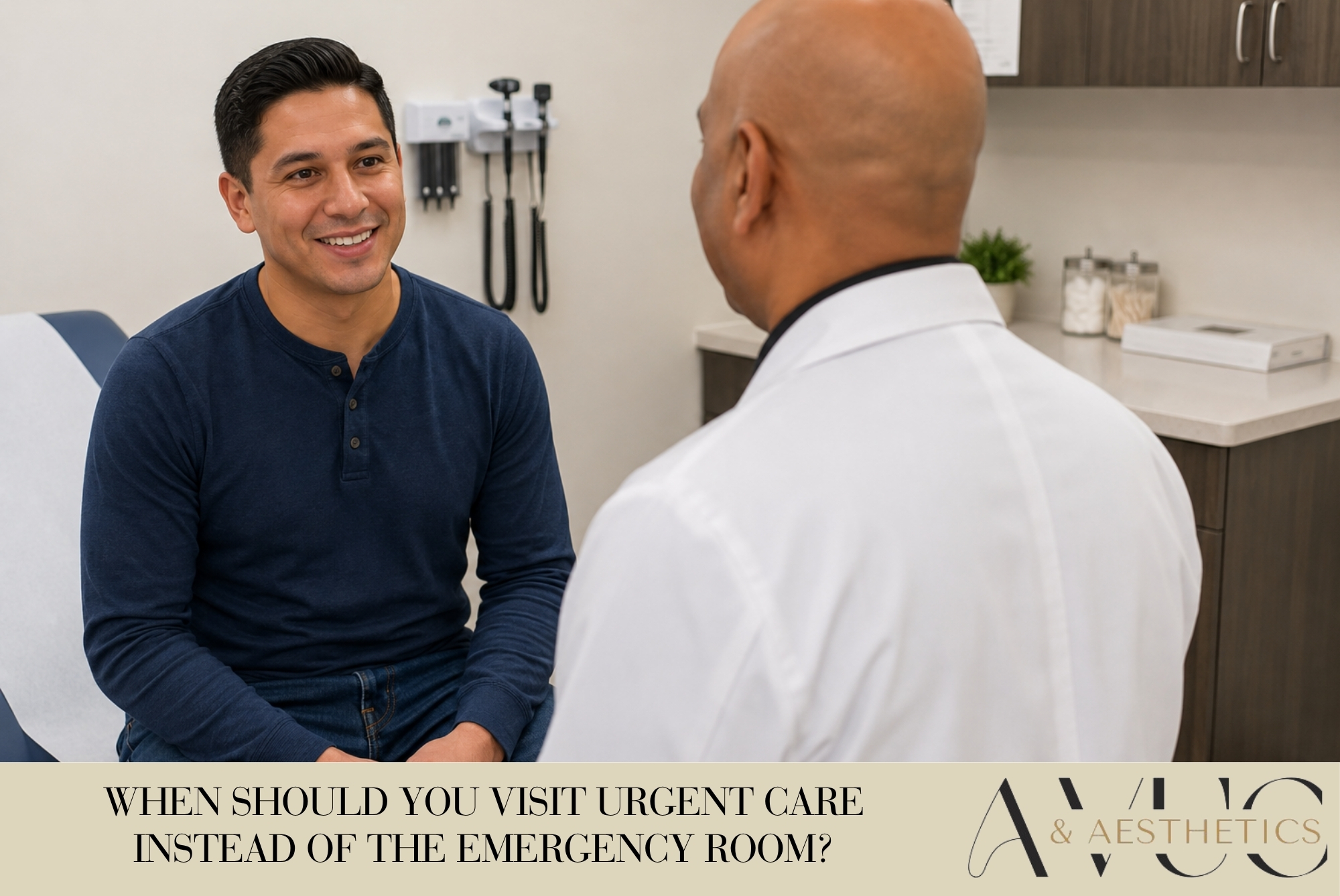
 When you are sick or injured and need medical attention quickly, deciding where to seek care can be stressful. Should you visit an urgent care center, go directly to a hospital emergency room, or wait for an appointment with your primary care provider?
Understanding the difference between urgent care and emergency care can help you make a more informed decision, potentially reduce unnecessary healthcare costs, and ensure that serious medical emergencies receive the immediate attention they require.
At Apricot Valley Urgent Care & Aesthetics, patients in Patterson, Modesto, and surrounding Central Valley communities have access to convenient medical care for many illnesses, injuries, and health concerns that require prompt attention but are not life-threatening.
What Is the Difference Between Urgent Care and the Emergency Room?
Urgent care centers and hospital emergency departments both provide medical care for conditions that may require prompt evaluation. However, they are designed for different levels of medical need.
Urgent care is generally appropriate for non-life-threatening illnesses and injuries that should be evaluated soon but do not require the advanced emergency resources of a hospital.
Emergency rooms are designed to evaluate and treat potentially life-threatening or limb-threatening conditions. Hospitals have resources for managing severe trauma, major cardiovascular and neurological emergencies, respiratory emergencies, and other conditions requiring a higher level of care.
A simple way to think about the distinction is this: urgent care addresses medical problems that need timely attention, while an emergency room is the appropriate destination when symptoms could represent an immediate threat to life or long-term health.
When Should You Visit Urgent Care?
Urgent care may be appropriate when your symptoms require timely medical attention but do not appear to be life-threatening.
Depending on the individual situation and the services available at the clinic, urgent care may evaluate common illnesses, minor injuries, infections, and other acute medical concerns.
Examples can include cold or flu-like symptoms, sore throats, ear discomfort, minor cuts, mild burns, sprains, strains, rashes, and other non-emergency concerns.
If you are unsure whether a particular condition can be treated at urgent care, contacting the clinic before your visit can help you determine whether urgent care is an appropriate option.
Common Illnesses That May Be Appropriate for Urgent Care
Many illnesses can develop quickly and make it difficult to wait several days for a routine medical appointment. Urgent care can provide timely evaluation when symptoms are uncomfortable or concerning but do not indicate a medical emergency.
Common reasons patients may seek urgent care include respiratory symptoms, fever, cough, sore throat, congestion, ear symptoms, nausea, vomiting, diarrhea, minor infections, and certain skin conditions.
The appropriate level of care ultimately depends on the severity of symptoms, the patient’s age and medical history, and whether warning signs of a serious condition are present.
Minor Injuries and Urgent Care
Not every injury requires a trip to a hospital emergency department. Urgent care may be an option for certain minor injuries when there is no severe bleeding, major deformity, loss of consciousness, or other sign of a serious emergency.
Examples may include minor sprains and strains, superficial cuts, minor burns, bruises, and certain other uncomplicated injuries.
More serious injuries—including major trauma, uncontrolled bleeding, significant head injuries, severe burns, or injuries involving loss of function—require emergency evaluation.
When Should You Go to the Emergency Room?
Some symptoms should not be managed by waiting for an urgent care visit.
Call 911 or seek emergency medical care for symptoms that may indicate an immediate or potentially life-threatening condition. Examples include severe difficulty breathing, symptoms of a heart attack or stroke, uncontrolled bleeding, major trauma, loss of consciousness, severe allergic reactions involving breathing or swelling of the airway, or other rapidly worsening and severe symptoms.
When there is uncertainty and a condition appears severe, potentially life-threatening, or rapidly worsening, choosing emergency medical care is generally the safer course.
Chest Pain: Urgent Care or Emergency Room?
New, severe, unexplained, or persistent chest pain can be associated with potentially serious medical conditions and should not be assumed to be something minor.
Chest pressure or pain accompanied by shortness of breath, sweating, nausea, fainting, weakness, or discomfort spreading to the arm, back, neck, shoulder, or jaw can be warning signs of a heart attack.
If you believe you or another person may be experiencing a heart attack, call 911 for emergency assistance rather than attempting to manage the condition through routine urgent care.
Stroke Symptoms Require Emergency Medical Attention
A suspected stroke is an emergency in which rapid treatment can be critical.
Warning signs can include sudden facial drooping, weakness or numbness—particularly on one side of the body—difficulty speaking or understanding speech, sudden vision changes, loss of coordination, dizziness, or a sudden severe headache.
If stroke symptoms develop, call 911 immediately. Do not delay emergency treatment by visiting an urgent care center first.
Difficulty Breathing: When Is It an Emergency?
Mild respiratory symptoms associated with an uncomplicated illness may sometimes be evaluated in urgent care. Severe difficulty breathing, however, requires emergency attention.
Call 911 for severe shortness of breath, blue or gray discoloration of the lips or skin, inability to speak normally because of breathing difficulty, loss of consciousness, severe respiratory distress, or other signs that a person is not receiving adequate oxygen.
Children, older adults, pregnant patients, and individuals with significant underlying health conditions may require particularly cautious assessment when respiratory symptoms occur.
Head Injuries: Choosing the Appropriate Level of Care
The severity and circumstances of a head injury are important when determining where to seek treatment.
A minor injury without concerning symptoms may sometimes be evaluated outside an emergency department. However, loss of consciousness, repeated vomiting, seizures, confusion, worsening severe headache, significant behavioral changes, weakness, difficulty waking, or neurological symptoms after a head injury warrant emergency medical evaluation.
Significant falls, automobile accidents, sports injuries, or other high-impact trauma may also require emergency evaluation even when symptoms initially appear limited.
Cuts, Wounds, and Bleeding
Urgent care may be appropriate for some minor cuts and wounds, particularly when bleeding can be controlled and there is no indication of major tissue, nerve, tendon, or blood vessel damage.
Emergency medical care is more appropriate for uncontrolled or severe bleeding, deep wounds involving major structures, traumatic amputations, or injuries associated with substantial trauma.
Applying firm, direct pressure may help control external bleeding while emergency assistance is being obtained.
Burns: Urgent Care or the ER?
Small, minor burns may sometimes be evaluated in an urgent care setting.
Severe burns, extensive burns, electrical or chemical burns, burns affecting the face or airway, and burns covering a large portion of the body can require emergency treatment. The seriousness of a burn is determined by more than appearance alone, so seek emergency evaluation when a burn is severe or its extent is uncertain.
Allergic Reactions: Know the Emergency Warning Signs
Minor localized allergic symptoms may sometimes be appropriate for non-emergency medical evaluation.
A severe allergic reaction, or anaphylaxis, is an emergency. Difficulty breathing, throat tightness, tongue or facial swelling, fainting, severe wheezing, or rapidly progressing symptoms require immediate emergency assistance.
Call 911 when symptoms suggest anaphylaxis.
Why Choose Urgent Care for Non-Emergency Medical Needs?
For appropriate non-emergency conditions, urgent care can provide a convenient alternative when a medical concern cannot comfortably wait for a routine appointment.
Patients may choose urgent care because it offers timely access to medical evaluation without using hospital emergency resources for conditions that are not life-threatening.
Using the appropriate healthcare setting also helps emergency departments prioritize patients experiencing severe and life-threatening medical conditions.
Urgent Care in Patterson, CA
Residents of Patterson and surrounding communities can visit Apricot Valley Urgent Care & Aesthetics at 1108 Ward Ave, Building A, Suite 2, Patterson, CA 95363.
For patients experiencing non-life-threatening illnesses or injuries requiring timely medical evaluation, the Patterson location provides a convenient local option.
Patients can call (209) 843-0434 or visit the Apricot Valley Urgent Care & Aesthetics website for additional information and appointment availability.
Urgent Care in Modesto, CA
Apricot Valley Urgent Care & Aesthetics also serves patients in Modesto at 3401 Dale Road, Suite 642-A, Modesto, CA 95356.
Having locations in both Patterson and Modesto gives Central Valley patients additional options when seeking timely medical care for appropriate non-emergency health concerns.
Appointments and additional information are available through the Apricot Valley Urgent Care & Aesthetics website.
How to Decide Between Urgent Care and the Emergency Room
When deciding where to seek care, consider how severe the symptoms are, how quickly they developed, whether they are worsening, and whether they could represent a threat to life or long-term health.
Urgent care may be appropriate when the problem requires prompt attention but the patient is otherwise stable.
The emergency room—or 911—is appropriate when symptoms are severe, life-threatening, potentially disabling, or rapidly worsening.
When in doubt about severe symptoms, prioritize emergency medical evaluation.
Frequently Asked Questions About Urgent Care vs. the Emergency Room
What is urgent care used for?
Urgent care is generally intended for illnesses and injuries requiring timely medical evaluation that are not immediately life-threatening. The exact conditions that can be evaluated or treated depend on the clinic’s available services and the patient’s individual circumstances.
When should I choose urgent care instead of the emergency room?
Urgent care may be appropriate when you have a non-life-threatening illness or minor injury that needs prompt attention but does not require hospital-level emergency services.
When should I skip urgent care and go directly to the ER?
Seek emergency care for severe or potentially life-threatening symptoms, including signs of heart attack or stroke, severe difficulty breathing, uncontrolled bleeding, major trauma, loss of consciousness, severe allergic reactions, or other rapidly worsening symptoms.
Should I call 911 for chest pain?
Severe, new, unexplained, or persistent chest pain—particularly when accompanied by shortness of breath, sweating, nausea, fainting, weakness, or pain spreading to other areas—can represent a medical emergency. If a heart attack is suspected, call 911.
Can urgent care treat minor injuries?
Urgent care may evaluate many minor injuries, depending on their severity and the services available at the clinic. Major trauma, severe bleeding, significant head injuries, or other potentially serious injuries should be evaluated in an emergency department.
Can urgent care evaluate cold and flu symptoms?
Many urgent care centers evaluate respiratory illnesses and cold or flu-like symptoms. Patients with severe breathing difficulties, confusion, blue or gray lips or skin, loss of consciousness, or other signs of severe illness should seek emergency medical care.
Can urgent care treat a cut?
Some minor cuts and wounds can be evaluated and treated in urgent care. Deep wounds, uncontrolled bleeding, major tissue damage, or wounds associated with serious trauma may require emergency care.
Should I go to urgent care after a head injury?
It depends on the severity of the injury and symptoms. Loss of consciousness, repeated vomiting, seizure, confusion, neurological changes, worsening severe headache, or difficulty waking after a head injury should prompt emergency medical evaluation.
Is an allergic reaction appropriate for urgent care?
Mild allergic symptoms may sometimes be evaluated in a non-emergency setting. Difficulty breathing, throat or tongue swelling, fainting, severe wheezing, or rapidly worsening symptoms can indicate anaphylaxis and require emergency care. Call 911 when a severe allergic reaction is suspected.
Can children visit urgent care?
Urgent care may be appropriate for some non-emergency pediatric illnesses and minor injuries, depending on the patient’s age, symptoms, and the clinic’s services. Severe breathing problems, seizures, loss of consciousness, significant dehydration, major injuries, or other serious symptoms require emergency evaluation.
What if I am not sure whether my symptoms are an emergency?
If symptoms appear severe, life-threatening, rapidly worsening, or potentially disabling, seek emergency medical attention. For non-emergency questions about whether a condition is appropriate for urgent care, you can contact Apricot Valley Urgent Care & Aesthetics for guidance regarding available services.
Do I need an appointment at Apricot Valley Urgent Care & Aesthetics?
Patients can visit avucandaesthetics.com/appointments for current appointment information and scheduling options. You may also call (209) 843-0434 with questions about availability.
Where is Apricot Valley Urgent Care & Aesthetics located?
Apricot Valley Urgent Care & Aesthetics has locations in Patterson and Modesto, California. The Patterson office is at 1108 Ward Ave, Building A, Suite 2, Patterson, CA 95363. The Modesto office is at 3401 Dale Road, Suite 642-A, Modesto, CA 95356.
Making the Right Choice for Your Medical Needs
Knowing when to choose urgent care instead of the emergency room can make navigating an unexpected illness or injury easier.
For non-life-threatening conditions that require timely attention, Apricot Valley Urgent Care & Aesthetics provides a convenient option for patients in Patterson, Modesto, and nearby Central Valley communities.
Serious or potentially life-threatening symptoms should always be treated as emergencies. If you believe you are experiencing a medical emergency, call 911 or go to the nearest emergency department.
For non-emergency medical concerns, contact Apricot Valley Urgent Care & Aesthetics or schedule an appointment online.
Contact Information
Apricot Valley Urgent Care & Aesthetics
Patterson Location
1108 Ward Ave, Bldg A, Suite 2
Patterson, CA 95363
Modesto Location
3401 Dale Road, Suite 642-A
Modesto, CA 95356
Phone: (209) 843-0434
Website: avucandaesthetics.com
Appointments: avucandaesthetics.com/appointments