
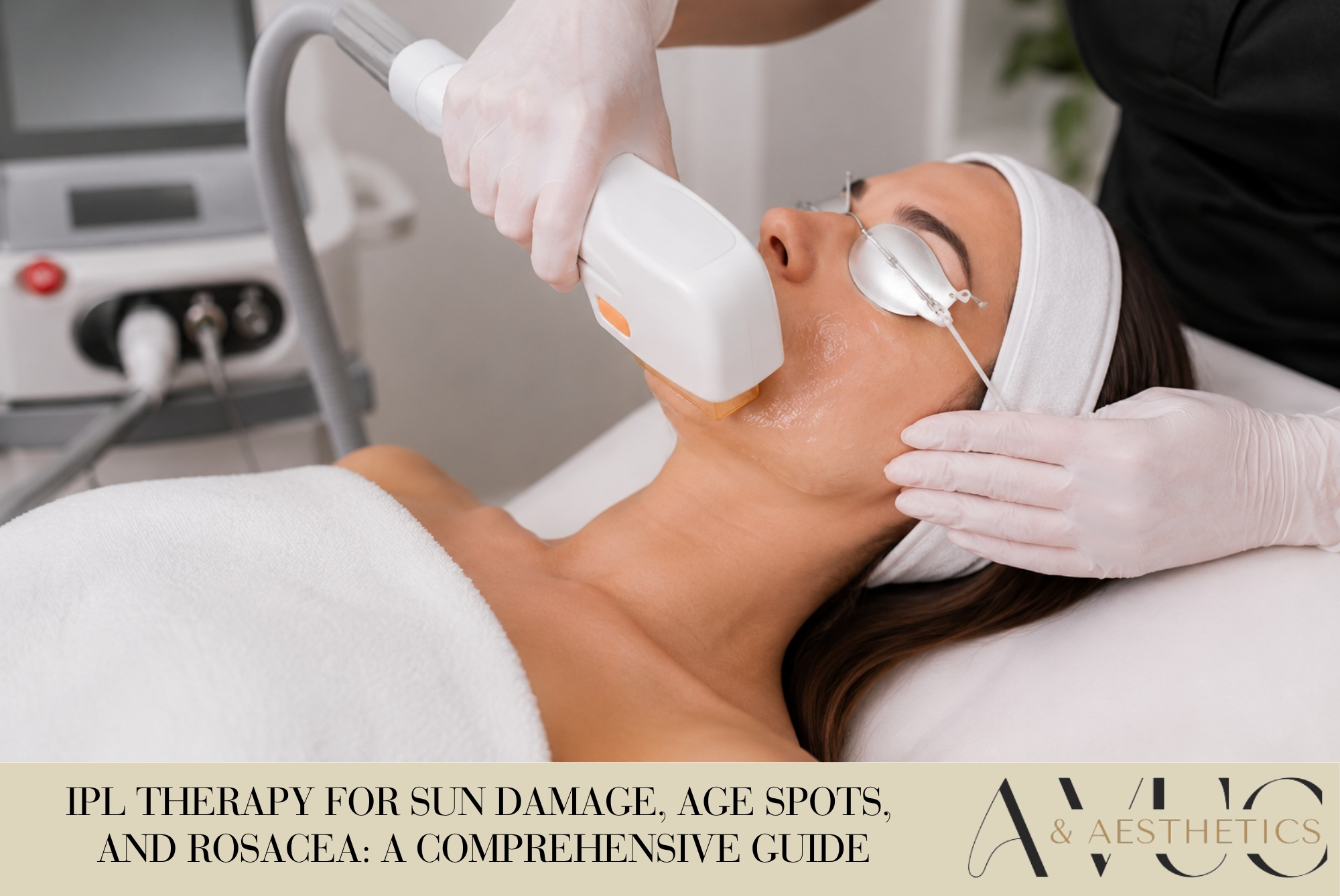
 Sun exposure, aging, and chronic facial redness can all affect the appearance and tone of the skin. Brown spots may become more noticeable over time, areas of redness can persist, and visible blood vessels may make the complexion appear uneven. For patients looking for a non-surgical approach to these concerns, Intense Pulsed Light (IPL) therapy may be an option.
At Apricot Valley Urgent Care & Aesthetics, with locations in Patterson and Modesto, California, patients can learn whether IPL therapy is appropriate for concerns such as sun damage, age spots, uneven pigmentation, facial redness, and rosacea-related visible blood vessels.
IPL is often called a laser treatment, but technically it is not a laser. Instead of producing a single wavelength of light, an IPL device delivers multiple wavelengths of broad-spectrum light. Selected wavelengths can target pigment and vascular structures in the skin while minimizing injury to surrounding tissue.
Understanding how IPL works, what it can treat, and its limitations can help patients make informed decisions about their skin care.
What Is IPL Therapy?
IPL, or Intense Pulsed Light therapy, is a non-invasive or minimally invasive light-based cosmetic treatment used to address several types of pigmentation and vascular concerns.
The device sends controlled pulses of broad-spectrum light into the skin. Different structures within the skin absorb different wavelengths of light. This allows IPL treatments to target chromophores—molecules that absorb light—including melanin in pigmented lesions and hemoglobin within blood vessels.
When unwanted pigment absorbs the light energy, that energy is converted into heat. The targeted pigment may temporarily darken before gradually breaking apart and being cleared through the skin’s natural processes.
When IPL targets small superficial blood vessels, light energy is absorbed by hemoglobin. The resulting controlled thermal effect can reduce the appearance of selected visible vessels and redness.
This selective targeting is one reason IPL can be useful for patients who have a combination of brown pigmentation and facial redness.
How IPL Therapy Can Help With Sun-Damaged Skin
Understanding Photoaging
Sun damage, medically known as photodamage or photoaging, develops because of repeated exposure to ultraviolet (UV) radiation.
UV radiation can cause biological changes within skin cells and affect collagen, elastin, and pigment production. Over time, these effects can contribute to uneven pigmentation, freckles, brown spots, roughness, fine lines, and other visible signs of premature skin aging.
California’s sunny climate can make consistent sun protection particularly important.
IPL treatments are commonly used to improve some of the pigmentation and redness associated with photodamage. However, IPL does not reverse every form of cellular damage caused by UV radiation, nor does it eliminate the future effects of sun exposure.
Targeting Uneven Pigmentation
Melanin is the pigment responsible for much of the color in the skin, hair, and eyes. Areas containing excess melanin can appear darker than the surrounding skin.
IPL can be configured so that melanin in certain superficial pigmented lesions absorbs the delivered light energy. After treatment, targeted spots may initially become darker before gradually fading or flaking as the skin renews itself.
The effectiveness of IPL depends on the type and depth of pigmentation, the patient’s skin characteristics, treatment settings, and other factors.
IPL Therapy for Age Spots and Brown Spots
What Are Age Spots?
Age spots are flat areas of increased pigmentation commonly associated with cumulative sun exposure. They are also known as solar lentigines or sun spots.
They frequently develop on areas that receive substantial sun exposure, including the face, hands, shoulders, arms, and upper chest.
Despite their name, age spots are strongly associated with UV exposure rather than aging alone.
Why IPL May Improve Age Spots
IPL is commonly used for selected benign pigmented lesions because melanin can absorb specific portions of the emitted light.
Following treatment, a brown spot may temporarily become more prominent. Over the following days, treated pigmentation may gradually fade or shed.
Some patients require a series of treatments rather than a single session. Results vary according to the characteristics of the lesion, skin type, treatment area, device parameters, and individual response.
Brown Spots Should Be Evaluated Appropriately
Not every dark spot should automatically be treated cosmetically.
Changes in the color, shape, border, size, or appearance of a skin lesion can sometimes warrant medical evaluation. IPL is a cosmetic treatment and should not be used as a substitute for appropriate evaluation of a suspicious lesion.
Patients who notice a new, changing, bleeding, painful, irregular, or otherwise concerning skin lesion should discuss it with a qualified healthcare professional before pursuing cosmetic treatment.
IPL Therapy for Rosacea and Facial Redness
What Is Rosacea?
Rosacea is a chronic inflammatory skin condition that commonly affects the central face. Depending on the individual and rosacea subtype, symptoms may include persistent redness, flushing, visible small blood vessels, bumps, pustules, irritation, or eye-related symptoms.
Rosacea is a medical condition rather than simply a cosmetic problem.
Although IPL cannot cure rosacea, light-based treatment may help reduce certain visible vascular features, particularly persistent redness and superficial visible blood vessels in appropriately selected patients.
How IPL Targets Facial Redness
Hemoglobin in blood absorbs selected wavelengths of light. IPL systems can use this principle to target certain superficial vascular structures.
Controlled light energy is converted into heat within the targeted vessels, which may reduce their visibility over time.
Because rosacea varies significantly between patients, treatment plans should be individualized. IPL may address visible redness while other aspects of rosacea require separate medical management.
IPL Does Not Eliminate Rosacea Triggers
Rosacea symptoms can be influenced by triggers that differ from person to person. Commonly reported triggers can include sun exposure, heat, certain foods or beverages, stress, exercise, weather changes, and some skin care products.
IPL does not prevent these triggers from affecting the skin.
Patients with rosacea may benefit from combining appropriate professional treatment with sun protection, gentle skin care, identification of personal triggers, and medical management when indicated.
What Happens During an IPL Treatment?
Consultation and Skin Assessment
An appropriate IPL treatment plan begins with an evaluation.
A provider may review the patient’s skin concerns, medical history, medications, recent sun exposure, history of abnormal scarring, previous cosmetic procedures, and other factors that could affect treatment safety or results.
The provider can also assess the patient’s skin type and determine whether IPL is appropriate for the specific pigmentation or vascular concern.
Preparing the Treatment Area
The treatment area is typically cleansed before treatment. Depending on the IPL system being used, a cooling or conductive gel may be applied.
Protective eyewear is important because IPL devices produce intense flashes of light.
Delivering the Light Pulses
The IPL handpiece is positioned over the treatment area and controlled pulses of light are delivered to the skin.
Patients may experience warmth or a brief snapping or stinging sensation during individual pulses. Comfort levels vary depending on the treatment area, device settings, and individual sensitivity.
Immediately After Treatment
Temporary redness, warmth, mild swelling, or sensitivity can occur following treatment.
Pigmented spots may become darker before they begin to fade. When vascular concerns are treated, temporary changes in redness can also occur.
The exact recovery experience varies among patients and depends on the treatment parameters and area treated.
How Many IPL Sessions Are Needed?
There is no universal number of IPL sessions appropriate for every patient.
The recommended treatment schedule depends on the condition being addressed, severity and depth of pigmentation or redness, skin type, treatment area, individual response, and desired outcome.
Some patients notice improvement after an initial session, while others benefit from a series of treatments.
A consultation at Apricot Valley Urgent Care & Aesthetics can help establish reasonable expectations based on the individual’s skin and treatment goals.
IPL Treatment and Different Skin Types
Why Skin Type Matters
IPL treatment requires careful patient selection because the technology can target melanin.
Skin containing higher concentrations of epidermal melanin can absorb more light energy, potentially increasing the risk of burns, blistering, or unwanted pigmentation changes when treatment is not appropriately selected or performed.
For this reason, treatment settings and candidacy should be evaluated individually rather than using the same protocol for every patient.
Tanning and Recent Sun Exposure
Recent tanning or substantial sun exposure can affect IPL safety.
A tan represents increased melanin activity within the skin. Because IPL energy can be absorbed by melanin, treating recently tanned skin may increase the likelihood of adverse effects.
Patients should tell their provider about recent sun exposure, tanning, or use of self-tanning products and follow all pre-treatment instructions.
What Are the Potential Benefits of IPL?
For appropriately selected patients, IPL may improve the appearance of several concerns during the same treatment program.
Potential applications include reducing the appearance of certain sun spots and age spots, improving uneven pigmentation, reducing selected visible blood vessels, and improving persistent facial redness.
Because results vary, patients should approach IPL as an individualized treatment rather than expecting a guaranteed degree of improvement.
Potential Side Effects and Risks of IPL Therapy
IPL is generally used as a non-surgical treatment, but it is still a medical-aesthetic procedure involving significant light and thermal energy.
Temporary effects can include redness, swelling, warmth, tenderness, sensitivity, and temporary darkening of pigmented areas.
Less common complications may include blistering, burns, crusting, scarring, and changes in skin pigmentation, including hyperpigmentation or hypopigmentation.
The possibility of complications reinforces the importance of appropriate screening, device selection, treatment settings, and aftercare.
Patients should disclose medications, medical conditions, pregnancy status, skin conditions, history of photosensitivity, recent tanning, and previous procedures during their consultation when relevant.
IPL Aftercare and Sun Protection
Follow Your Individual Aftercare Instructions
Aftercare recommendations may vary depending on the IPL device, treatment intensity, treatment area, and individual skin response.
Patients should follow the specific instructions provided by their treatment provider rather than relying solely on generalized advice.
Protect Treated Skin From the Sun
Sun protection is particularly important after IPL therapy.
Freshly treated skin may be more sensitive to environmental exposure. Furthermore, continued UV exposure can contribute to additional pigmentation and photodamage, potentially working against the cosmetic improvements patients are trying to achieve.
A comprehensive sun-protection strategy can include broad-spectrum sunscreen, protective clothing, hats, shade, and avoiding unnecessary periods of intense direct sunlight.
Avoid Picking at Darkened Spots
Pigmented lesions can temporarily darken after IPL. Patients should generally allow treated areas to progress through the natural healing process and avoid picking, scratching, or aggressively exfoliating the skin unless specifically instructed otherwise by their provider.
IPL vs. Laser Treatment: What Is the Difference?
IPL and laser therapy both use light energy, but they are not identical technologies.
A laser produces a more specific wavelength or narrow range of wavelengths. IPL generates broad-spectrum light that can be filtered to target particular chromophores.
Neither technology is automatically superior in every situation.
The better choice depends on the condition being treated, skin type, depth and characteristics of the target, available technology, provider assessment, and treatment goals.
IPL vs. Chemical Peels for Pigmentation
Chemical peels use chemical solutions to create controlled exfoliation at varying depths, while IPL uses light energy to target selected pigment and vascular structures.
Both approaches may be used for certain pigmentation concerns, but they work through different biological mechanisms.
Patients with both brown pigmentation and vascular redness may be interested in IPL because the technology can potentially address both types of chromophores. However, candidacy should be assessed individually.
IPL vs. Topical Skin Care
Topical skin care and IPL should not necessarily be viewed as competing options.
Certain topical products may support overall skin appearance, pigment management, hydration, or other goals, while IPL targets selected pigment or vascular structures using light energy.
A long-term skin care strategy may include professional procedures, daily skin care, and consistent sun protection depending on the patient’s needs.
Why Sun Protection Still Matters After Successful IPL Treatment
IPL may reduce the appearance of existing sun-related pigmentation, but it does not make the skin resistant to future UV damage.
New areas of pigmentation can develop with continued sun exposure.
Daily photoprotection is therefore an important part of maintaining results and supporting overall skin health. This is especially relevant for people living in areas such as Patterson, Modesto, and California’s Central Valley, where substantial sun exposure may occur throughout much of the year.
Who May Be a Candidate for IPL Therapy?
Potential candidates may include adults bothered by certain types of sun damage, age spots, uneven pigmentation, facial redness, or visible superficial blood vessels.
Candidacy cannot be determined solely by the name of a skin concern. Skin type, recent sun exposure, medications, medical history, characteristics of the target lesion, and other factors may influence whether IPL is suitable.
A professional consultation is the appropriate way to determine whether IPL or another treatment should be considered.
Why Choose Apricot Valley Urgent Care & Aesthetics for IPL Therapy?
Apricot Valley Urgent Care & Aesthetics provides aesthetic services for patients in Patterson, Modesto, and surrounding Central Valley communities.
An individualized approach is particularly important with light-based procedures. Pigmentation, redness, skin type, treatment history, and aesthetic goals can differ considerably between patients.
Patients interested in IPL therapy can schedule an appointment to discuss their concerns, determine whether IPL is appropriate, and receive treatment recommendations based on their individual skin and goals.
Frequently Asked Questions About IPL Therapy
What does IPL stand for?
IPL stands for Intense Pulsed Light. It is a light-based technology that delivers multiple wavelengths of light rather than the single wavelength typically associated with a laser.
Is IPL the same as laser therapy?
No. Although IPL and lasers both use light energy, IPL uses broad-spectrum light, while laser systems typically use a specific wavelength or more narrowly defined range of wavelengths.
Can IPL remove sun damage?
IPL may improve the appearance of certain visible signs of photodamage, particularly selected brown spots, uneven pigmentation, and redness. It does not erase all biological effects of UV exposure or prevent future sun damage.
Does IPL work for age spots?
IPL is commonly used to treat selected benign pigmented lesions, including certain sun-related age spots or solar lentigines. Whether a particular spot is suitable for IPL should be determined during an evaluation.
Can IPL completely remove age spots?
Results vary. Some spots may fade substantially, while others may show partial improvement or require multiple treatments. New pigmentation can also develop following future sun exposure.
Can IPL treat freckles?
IPL may reduce the appearance of some freckles and other superficial pigmented lesions. Individual results depend on the characteristics of the pigmentation and the patient’s skin.
Can IPL help rosacea?
IPL may help reduce persistent facial redness and visible superficial blood vessels associated with some presentations of rosacea. It does not cure the underlying chronic condition.
Will IPL stop rosacea flare-ups?
Not necessarily. IPL can address selected visible vascular features, but rosacea triggers and inflammation may still require ongoing skin care, trigger management, or medical treatment.
Can IPL treat visible facial blood vessels?
IPL may be used to reduce the appearance of certain superficial visible blood vessels by targeting hemoglobin with light energy. Suitability depends on the characteristics and location of the vessels.
Is IPL painful?
Patients often describe IPL pulses as brief warmth, snapping, or stinging sensations. Experiences vary depending on sensitivity, treatment location, and device settings.
How long does an IPL treatment take?
Treatment time varies according to the size and number of areas being treated. Your provider can provide a more specific estimate after evaluating your treatment plan.
How many IPL treatments will I need?
The number of sessions varies by patient and treatment goal. Some concerns may improve after an initial treatment, while others may require a planned series of sessions.
How soon will I see IPL results?
Changes occur gradually. Pigmented areas can initially darken before fading, while vascular improvements may develop over time. Your provider can explain the expected timeline for your specific treatment.
Is there downtime after IPL?
IPL is often associated with relatively limited downtime, but temporary redness, warmth, swelling, sensitivity, and darkening of pigmented spots can occur. Recovery varies between individuals and treatment settings.
Can I wear makeup after IPL?
The appropriate timing for applying makeup depends on how the skin responds and the provider’s aftercare recommendations. Patients should follow their individualized post-treatment instructions.
Can I exercise after IPL?
Heat and vigorous exercise may aggravate redness or sensitivity shortly after some light-based procedures. Follow the aftercare instructions provided for your specific treatment.
Should I avoid the sun before IPL?
Recent tanning and significant sun exposure can affect treatment safety. Patients should discuss recent sun exposure with their provider and follow pre-treatment sun-avoidance instructions.
Do I need sunscreen after IPL?
Sun protection is particularly important after treatment. Patients should follow their provider’s recommendations regarding sunscreen and other protective measures.
Can IPL permanently prevent age spots?
No. IPL can improve existing pigmentation, but it cannot prevent future pigmentation caused by UV exposure, aging, hormonal influences, or other factors.
Can IPL make pigmentation worse?
Pigment changes, including hyperpigmentation and hypopigmentation, are possible adverse effects. Risk depends on factors including skin type, tanning, treatment settings, and individual response.
Is IPL safe for darker skin tones?
Skin type is an important consideration because melanin absorbs light energy. Certain skin tones may have an increased risk of burns or pigment changes with some IPL treatments. A professional assessment is necessary to determine whether IPL is appropriate or whether an alternative treatment may be preferable.
Can IPL be performed on tanned skin?
Recent tanning can increase melanin in the skin and potentially increase treatment risks. Patients should disclose recent tanning or sun exposure before IPL treatment.
Can IPL treat melasma?
Melasma requires careful assessment. Heat and light-based treatments can sometimes aggravate pigmentation in susceptible individuals, and IPL is not appropriate for every case. Patients with suspected melasma should be professionally evaluated before choosing a procedure.
Can IPL treat suspicious moles or skin cancer?
IPL is not a substitute for diagnosis or treatment of skin cancer. New, changing, bleeding, irregular, or otherwise suspicious lesions should be medically evaluated rather than simply treated cosmetically.
What should I tell my provider before IPL?
Patients should provide an accurate medical history and discuss medications, supplements, skin conditions, photosensitivity, recent tanning or sun exposure, previous cosmetic treatments, pregnancy status when applicable, and any history that could affect healing or treatment safety.
How can I maintain my IPL results?
Consistent sun protection and an appropriate skin care routine can help support results. Some patients may also choose periodic maintenance treatments if recommended by their provider.
Where can I get IPL therapy in Patterson, California?
Patients interested in IPL therapy in Patterson can contact Apricot Valley Urgent Care & Aesthetics at its Patterson location at 1108 Ward Ave, Building A, Suite 2, Patterson, CA 95363.
Where can I get IPL therapy in Modesto, California?
Apricot Valley Urgent Care & Aesthetics also has a Modesto location at 3401 Dale Road, Suite 642-A, Modesto, CA 95356.
How do I schedule an IPL consultation with Apricot Valley Urgent Care & Aesthetics?
Patients can call (209) 843-0434 or visit the online appointments page at avucandaesthetics.com/appointments to schedule an appointment and discuss whether IPL therapy is appropriate for their skin concerns.
Schedule an IPL Consultation in Patterson or Modesto
If sun spots, age spots, facial redness, or visible blood vessels are affecting the appearance of your skin, IPL therapy may offer a non-surgical treatment option.
The appropriate treatment depends on your skin type, the cause and characteristics of the concern, previous treatments, recent sun exposure, and your aesthetic goals. A professional evaluation can help determine whether IPL is suitable and what results can reasonably be expected.
Contact Apricot Valley Urgent Care & Aesthetics to schedule a consultation at the Patterson or Modesto location and learn more about IPL therapy for sun damage, age spots, and rosacea-related redness.
Contact Information
Apricot Valley Urgent Care & Aesthetics
Patterson Location
1108 Ward Ave, Bldg A, Suite 2
Patterson, CA 95363
Modesto Location
3401 Dale Road, Suite 642-A
Modesto, CA 95356
Phone: (209) 843-0434
Website: avucandaesthetics.com
Appointments: avucandaesthetics.com/appointments