
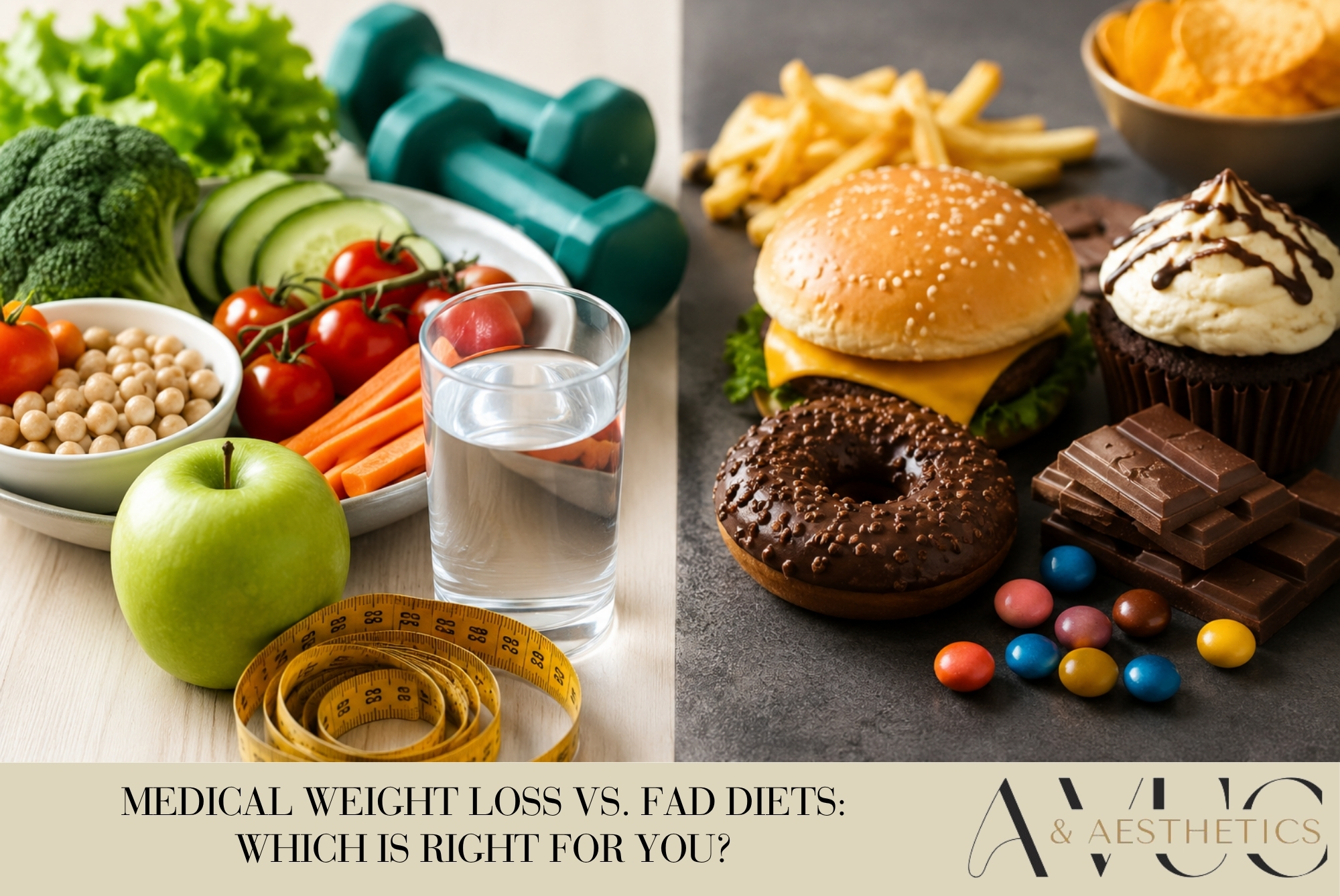
 Losing weight can be challenging, especially when social media, advertisements, and online trends constantly promote new diets promising rapid results. From restrictive eating plans and detoxes to extreme calorie cutting and eliminating entire food groups, fad diets often claim to provide a quick path to weight loss. But quick results do not always translate into healthy, sustainable outcomes.
Medical weight loss takes a different approach. Rather than relying on a one-size-fits-all diet trend, a medically supervised weight management program considers the individual, including health history, lifestyle, nutrition, weight-related goals, and other relevant factors. Depending on a patient’s needs and clinical eligibility, a program may incorporate nutrition counseling, lifestyle coaching, general medical supervision, and prescription medications.
At Apricot Valley Urgent Care & Aesthetics, patients in Patterson and Modesto, California, can discuss medically supervised weight-loss options with a healthcare professional and determine an approach appropriate for their individual needs.
What Is Medical Weight Loss?
Medical weight loss is a healthcare-guided approach to weight management. Instead of simply following a diet found online or trying the latest weight-loss trend, patients work with healthcare professionals to develop a strategy based on their individual circumstances.
A Personalized Approach to Weight Management
No two patients have exactly the same health history, lifestyle, nutritional habits, challenges, or weight-loss goals. For that reason, an effective weight-management strategy should consider more than the number on a scale.
During a medical weight-loss evaluation, a healthcare professional may review factors such as current weight, medical history, medications, previous weight-loss attempts, eating patterns, physical activity, lifestyle, and personal goals.
This information can help determine which weight-management strategies may be appropriate.
Medical Supervision
One of the most important differences between medical weight loss and a fad diet is professional oversight.
Medical supervision gives patients an opportunity to discuss their progress, challenges, questions, and potential treatment options with a qualified healthcare professional. It can also help determine whether a particular weight-loss approach is appropriate based on the patient’s health and individual circumstances.
Medical weight management is not about guaranteeing a particular number of pounds lost. It is about creating a structured approach in which progress and treatment decisions can be evaluated over time.
Nutrition Counseling
Nutrition plays a central role in long-term weight management. However, sustainable nutrition does not necessarily mean following an extremely restrictive diet.
Nutrition counseling can help patients better understand food choices, portions, eating patterns, and strategies for creating a balanced approach that can realistically fit into everyday life.
The objective is generally to build habits that can be maintained rather than relying on temporary restrictions solely to achieve short-term changes on the scale.
Lifestyle Coaching
Weight management extends beyond food.
Sleep, stress, physical activity, daily routines, work schedules, and other behavioral and environmental factors can influence a person’s ability to maintain healthy habits.
Lifestyle coaching can help patients identify obstacles, develop practical strategies, establish achievable goals, and work toward behaviors that support long-term weight management.
Prescription Weight-Loss Medications
For some patients, prescription medication may be considered as part of a comprehensive medical weight-management plan.
Prescription weight-loss medications are not appropriate for everyone. Eligibility depends on individual health factors and requires evaluation by a qualified healthcare professional. Medication should be used only as prescribed and monitored according to the clinician’s recommendations.
When appropriate, prescription medication may complement—not replace—nutrition, physical activity, behavioral changes, and ongoing medical care.
What Is a Fad Diet?
A fad diet is generally an eating plan that becomes popular quickly and often promises substantial or unusually rapid weight loss.
Some fad diets focus heavily on one type of food, eliminate major food groups, impose highly restrictive rules, or promote products or techniques presented as shortcuts to weight loss.
Common Characteristics of Fad Diets
Although diet trends vary, common warning signs can include promises of dramatic results in a very short period, extremely restrictive food rules, claims that one food or ingredient is responsible for weight gain, required supplements or proprietary products, little emphasis on sustainable behavior change, and recommendations that are not individualized to a person’s medical needs.
Popularity is not the same as scientific evidence. A diet can trend widely online without being appropriate for every person who tries it.
Why Quick Weight Loss Can Be Appealing
The attraction of fad diets is understandable. When someone has struggled to lose weight, a program promising rapid results may sound appealing.
However, the more important question is not simply, “How quickly can I lose weight?”
It is also, “Can I safely and realistically maintain the behaviors required to manage my weight over time?”
A plan that is impossible to sustain may offer limited value for long-term weight management.
Medical Weight Loss vs. Fad Diets: Key Differences
Medical weight loss and fad diets can differ significantly in their underlying philosophy.
Medical Oversight
Medical weight loss involves professional evaluation and supervision.
A fad diet may be followed without any medical assessment, meaning the diet may not account for a person’s health conditions, medications, nutritional needs, or other individual considerations.
Personalization
Medical weight-management plans can be adapted to the individual.
Fad diets typically provide broadly standardized rules. What is promoted to thousands or millions of people may not necessarily be appropriate for a particular patient.
Sustainability
A medically guided program can focus on habits and strategies that patients can incorporate into everyday life.
Many fad diets rely on significant short-term restriction. When the diet ends, maintaining the same eating pattern may be difficult.
Nutrition
Medical weight management can incorporate balanced nutrition education and counseling.
Some fad diets restrict entire food groups or encourage eating patterns that may be difficult to maintain and, depending on the diet, may not adequately meet an individual’s nutritional needs.
Prescription Treatment
Medical weight management can include prescription medications when clinically appropriate.
Prescription medications should not be confused with unregulated supplements, “fat burners,” detox products, or other products marketed online as weight-loss shortcuts.
Ongoing Support
Weight loss is rarely a perfectly linear process. Progress can change over time, and patients may encounter plateaus or difficulties maintaining new habits.
Medical supervision provides opportunities to evaluate progress and adjust the treatment strategy when appropriate.
Why Do Fad Diets Often Fail to Produce Sustainable Results?
A person may initially lose weight while following a restrictive diet, particularly when the diet significantly reduces overall calorie intake. The challenge is maintaining the approach over the long term.
Restrictive Rules Can Be Difficult to Maintain
A diet may work temporarily because someone follows its rules very closely for several weeks. But if those rules are unrealistic for normal life, maintaining them for months or years can become difficult.
Long-term weight management generally requires an approach that can coexist with work, family responsibilities, social activities, travel, and everyday routines.
Weight Management Is More Complex Than One Food
Fad diets sometimes reduce weight management to a simple explanation: avoid one ingredient, eliminate one food group, drink a particular beverage, or follow a rigid eating schedule.
In reality, body weight can be influenced by multiple interconnected factors, including energy intake, physical activity, sleep, behavioral patterns, medications, health conditions, environment, and other individual factors.
This complexity is one reason professional evaluation can be valuable.
Short-Term Results and Long-Term Success Are Different
A diet that produces an initial change on the scale is not automatically a sustainable long-term strategy.
Long-term success also involves developing realistic habits and having a plan for maintaining progress.
What Does a Medical Weight-Loss Program Include?
Medical weight-management programs can vary depending on the provider and patient’s needs. At Apricot Valley Urgent Care & Aesthetics, weight-loss care may involve several complementary strategies based on clinical evaluation.
Initial Medical Evaluation
A healthcare professional can begin by reviewing the patient’s medical history, weight-related concerns, goals, current lifestyle, and previous approaches to weight management.
This evaluation helps establish an appropriate starting point.
Individualized Weight-Loss Planning
Rather than automatically prescribing the same diet or treatment to everyone, medical weight management allows recommendations to be tailored to the patient.
The plan may incorporate nutrition strategies, behavioral changes, lifestyle coaching, medical supervision, and prescription treatment when appropriate.
Nutrition Guidance
Nutrition counseling can help patients develop practical eating strategies that support their goals while considering individual needs.
Rather than categorizing every food as simply “good” or “bad,” patients can learn how eating patterns, food choices, and portions fit into a broader weight-management strategy.
Lifestyle and Behavioral Support
Changing long-established habits can take time.
Lifestyle coaching can help patients identify achievable changes and develop routines that are more realistic to maintain.
This may include discussing physical activity, meal planning, sleep routines, stress-management strategies, or other lifestyle considerations appropriate to the individual.
Medication When Medically Appropriate
Some patients may qualify for prescription weight-management medication following an evaluation.
The decision to prescribe medication depends on the individual. A healthcare professional can discuss potential benefits, risks, contraindications, side effects, expectations, and appropriate monitoring.
Patients should not begin, discontinue, share, or change the dose of prescription weight-loss medication without appropriate medical guidance.
Progress Monitoring
Follow-up can be an important component of medical weight management.
Monitoring gives patients and their healthcare professionals an opportunity to review progress, discuss challenges or side effects, reinforce sustainable habits, and determine whether changes to the treatment plan are appropriate.
Are Prescription Weight-Loss Medications Better Than Dieting Alone?
There is no single weight-loss strategy that is right for everyone.
For some eligible patients, prescription medications may be incorporated into a comprehensive weight-management plan. Other patients may benefit primarily from nutrition, physical activity, behavioral changes, and lifestyle coaching.
Prescription treatment should not be viewed as a replacement for healthy habits. When medication is appropriate, it is generally most useful as one component of a broader medical weight-management strategy.
A healthcare professional can determine whether medication should be considered based on the patient’s individual health profile.
Why Personalized Weight Management Matters
Weight management can be influenced by numerous factors, which is why comparing your results to another person’s results may not be useful.
Health History Matters
Existing medical conditions, previous procedures, medications, and other aspects of a patient’s health history may affect which weight-loss strategies are appropriate.
Medical supervision allows these considerations to become part of the decision-making process.
Goals Differ From Patient to Patient
One patient may want to make gradual lifestyle changes, while another may be interested in learning whether prescription medication is an option.
Personalized care allows these different goals to be discussed rather than forcing every patient into the same program.
Progress Can Change Over Time
Weight-loss progress may vary from week to week.
A medically supervised program provides an opportunity to evaluate those changes within a broader context rather than responding to every fluctuation with another restrictive diet.
How to Spot Weight-Loss Misinformation Online
The internet has made weight-loss information widely accessible, but it has also made misleading health claims easier to spread.
Be Cautious of Guaranteed Results
Statements guaranteeing that everyone will lose a specific amount of weight within a certain period should be treated cautiously.
Individual responses to weight-management interventions vary.
Be Skeptical of “Detox” and Miracle Claims
Products marketed as detoxes, cleanses, metabolism boosters, or miracle fat burners may use scientific-sounding language without providing strong evidence for their claims.
The body already has complex physiological systems responsible for processing and eliminating waste. Patients should discuss supplements or restrictive detox regimens with a healthcare professional, particularly if they take medications or have medical conditions.
Look for Qualified Medical Guidance
Online testimonials and influencer experiences are not substitutes for individualized medical advice.
A treatment that is appropriate for one person may be inappropriate for another.
Is Medical Weight Loss Right for You?
Medical weight loss may be worth discussing if you have repeatedly tried diets without maintaining your results, want professional guidance, are interested in improving your nutrition and lifestyle habits, want to understand whether prescription treatment may be appropriate, or simply prefer a structured approach to weight management.
An evaluation does not mean every patient will receive the same treatment. The purpose is to determine an appropriate approach based on individual needs.
Medical Weight Loss in Patterson and Modesto, CA
Residents of Patterson, Modesto, and surrounding Central Valley communities who are interested in medically supervised weight management can contact Apricot Valley Urgent Care & Aesthetics.
With locations in Patterson and Modesto, Apricot Valley Urgent Care & Aesthetics provides convenient access for patients seeking professional guidance about their weight-management options.
A consultation can help patients understand available approaches, including medical supervision, nutrition counseling, lifestyle coaching, and prescription medications when clinically appropriate.
Frequently Asked Questions About Medical Weight Loss vs. Fad Diets
What is the biggest difference between medical weight loss and a fad diet?
Medical weight loss involves healthcare professional oversight and can be individualized based on a patient’s health, lifestyle, goals, and clinical needs. Fad diets generally provide standardized dietary rules and may not account for individual medical considerations.
Is medical weight loss just another diet?
No. Medical weight management can involve much more than a diet. Depending on the patient, it may include medical evaluation, nutrition counseling, lifestyle coaching, behavioral changes, progress monitoring, and prescription medications when appropriate.
Are fad diets safe?
Not every popular diet is inherently unsafe, but highly restrictive diets may be inappropriate for some people and can potentially create nutritional or medical concerns. Before making substantial dietary changes, particularly if you have a medical condition or take medication, consider discussing the plan with a healthcare professional.
Why do people regain weight after fad diets?
There can be many reasons. One common challenge is sustainability. If a diet requires restrictions that are difficult to maintain in everyday life, a person may return to previous eating patterns after stopping the diet. Weight regulation is complex, so individual experiences vary.
Does medical weight loss guarantee results?
No responsible medical weight-management program should guarantee a particular result. Individual outcomes vary based on numerous factors, including health, adherence, treatment approach, lifestyle, and individual response.
Does Apricot Valley Urgent Care & Aesthetics offer prescription weight-loss medication?
Prescription medications may be considered as part of medical weight management when clinically appropriate. A healthcare professional must evaluate the individual patient to determine eligibility and whether a particular medication is appropriate.
Can everyone take prescription weight-loss medication?
No. Prescription weight-loss medications are not appropriate for everyone. Eligibility, risks, contraindications, potential side effects, and other considerations should be reviewed with a qualified healthcare professional.
Do I still need to change my lifestyle if I use weight-loss medication?
Healthy nutrition and sustainable lifestyle habits remain important components of long-term weight management. When prescription medication is used, it may be combined with nutrition and lifestyle strategies according to the patient’s treatment plan.
Is medical weight loss only for people who need to lose a large amount of weight?
Not necessarily. Whether medical weight management or prescription treatment is appropriate depends on clinical evaluation and individual circumstances rather than a person’s assumptions about how much weight they “should” lose.
How quickly should I expect to lose weight?
There is no universal timeline. Appropriate weight-loss goals and expectations depend on the individual and the treatment being used. A healthcare professional can discuss realistic expectations based on your circumstances.
What should I bring to a medical weight-loss appointment?
It can be helpful to have an up-to-date list of medications and supplements, relevant medical history, information about previous weight-loss attempts, and questions about your goals or treatment options. Contact the practice if you need specific instructions before your appointment.
Can nutrition counseling help even if I already know what foods are healthy?
Yes. Nutrition counseling can go beyond identifying nutritious foods. It may help with portions, eating patterns, meal planning, practical barriers, and strategies for incorporating healthier choices into everyday life.
What if I have tried multiple diets and nothing has worked long term?
A medical evaluation can help you discuss your previous attempts and explore a more individualized approach. Rather than immediately starting another restrictive diet, you can work with a healthcare professional to determine which strategies may be appropriate for you.
Is medical weight loss the same for every patient?
No. Personalization is one of the primary distinctions of medically supervised weight management. Treatment recommendations can differ based on health history, goals, clinical eligibility, lifestyle, and individual response.
How can I tell whether a weight-loss claim is trustworthy?
Be cautious when a program promises guaranteed results, exceptionally rapid weight loss, effortless results, or claims that a single food, supplement, or product solves weight problems. Look for evidence-based information and consult qualified healthcare professionals when making decisions that may affect your health.
Can I schedule a medical weight-loss consultation in Patterson, CA?
Patients interested in medical weight-management services can contact Apricot Valley Urgent Care & Aesthetics at its Patterson location at 1108 Ward Ave, Bldg A, Suite 2, Patterson, CA 95363. Call (209) 843-0434 or visit the practice website for appointment information.
Can I schedule a medical weight-loss consultation in Modesto, CA?
Apricot Valley Urgent Care & Aesthetics also has a Modesto location at 3401 Dale Road, Suite 642-A, Modesto, CA 95356. Call (209) 843-0434 or visit the practice’s appointment page to learn more about scheduling.
Choose an Evidence-Informed Approach to Weight Management
When deciding between medical weight loss and the latest fad diet, consider more than short-term promises.
A sustainable approach to weight management should account for your health, lifestyle, nutritional needs, goals, and ability to maintain new habits over time. For some people, professional medical supervision can provide additional structure and access to treatment options that cannot be obtained through a generic diet plan.
Apricot Valley Urgent Care & Aesthetics offers patients in Patterson and Modesto, California, an opportunity to discuss weight management with healthcare professionals. Depending on individual needs and clinical eligibility, care may incorporate general medical supervision, nutrition counseling, lifestyle coaching, and prescription medications.
If you are tired of moving from one diet trend to another, consider discussing your options with a healthcare professional and developing an approach designed around you.
This article is for general educational purposes and is not a substitute for individualized medical advice, diagnosis, or treatment. Weight-loss treatments, including prescription medications, are not appropriate for everyone. Consult a qualified healthcare professional regarding your individual health and treatment options.
Contact Information
Apricot Valley Urgent Care & Aesthetics
Patterson Location
1108 Ward Ave, Bldg A, Suite 2
Patterson, CA 95363
Modesto Location
3401 Dale Road, Suite 642-A
Modesto, CA 95356
Phone: (209) 843-0434
Website: avucandaesthetics.com
Appointments: avucandaesthetics.com/appointments