
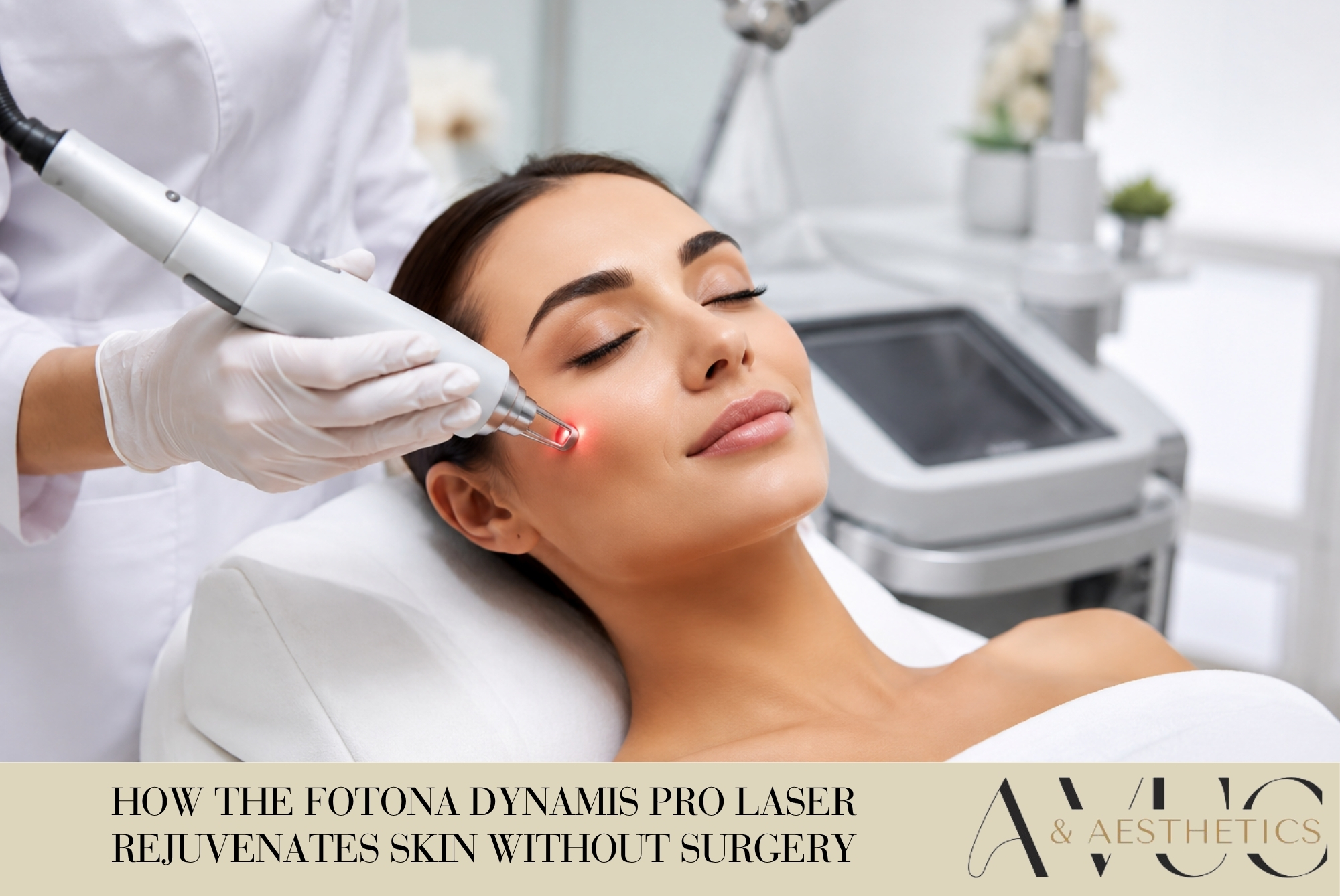
 For people who want younger-looking, healthier skin without surgery, modern laser technology offers increasingly sophisticated options. At Apricot Valley Urgent Care & Aesthetics, patients in Patterson and Modesto, California, can explore advanced aesthetic treatments designed to improve the appearance and quality of the skin while avoiding the incisions and extended recovery associated with cosmetic surgery.
The Fotona Dynamis Pro is a versatile medical laser platform that uses complementary laser wavelengths to target different layers and structures of the skin. Depending on the treatment protocol selected, laser energy may be used to stimulate collagen remodeling, improve skin texture, address visible signs of aging, and create a firmer, more refreshed appearance.
Unlike surgical procedures that physically remove or reposition tissue, Fotona laser treatments work by delivering carefully controlled energy to targeted areas. The goal is to encourage beneficial changes within the skin while preserving surrounding tissue and allowing patients to return to many normal activities relatively quickly.
Understanding how the Fotona Dynamis Pro works, what concerns it may address, and what patients can expect can help you determine whether nonsurgical laser rejuvenation deserves a place in your aesthetic treatment plan.
What Is the Fotona Dynamis Pro?
The Fotona Dynamis Pro is a multi-application laser system used for medical and aesthetic procedures. One of its distinguishing features is its combination of two laser wavelengths: Nd:YAG and Er:YAG.
These wavelengths interact with tissue differently, allowing a trained provider to select treatment parameters based on the patient’s skin, treatment area, and aesthetic objectives.
Nd:YAG Laser Technology
Nd:YAG laser energy can penetrate more deeply into tissue than more superficial laser treatments. In aesthetic applications, controlled heating of deeper tissue may be used to promote collagen remodeling and address certain concerns beneath the skin’s surface.
Because treatment settings and techniques can be adjusted, Nd:YAG technology can play different roles depending on the specific Fotona treatment protocol being performed.
Er:YAG Laser Technology
Er:YAG laser energy is strongly absorbed by water in tissue, making it particularly useful for controlled treatment of the skin’s more superficial layers.
Depending on the selected settings, Er:YAG energy may be used for procedures ranging from gentle thermal treatments to more intensive resurfacing. This versatility allows providers to tailor treatment intensity to the patient’s needs and desired recovery period.
How Does Fotona Dynamis Pro Skin Rejuvenation Work?
Skin rejuvenation is not simply about treating the visible surface. Aging affects multiple layers of tissue, which is one reason a treatment platform capable of working at different depths can be valuable.
Fotona Dynamis Pro treatments can use controlled laser energy to create targeted thermal effects within the skin. This controlled stimulation can initiate natural tissue-remodeling processes, including changes involving collagen.
Collagen is an important structural protein that contributes to the skin’s strength and firmness. The body’s collagen framework changes with age, and environmental factors such as ultraviolet exposure can contribute to visible skin aging.
By delivering controlled energy at appropriate depths, laser rejuvenation aims to stimulate remodeling rather than surgically repositioning tissue.
How Can Fotona Stimulate Collagen Without Surgery?
One of the primary principles behind nonsurgical laser rejuvenation is controlled thermal stimulation.
When carefully selected laser energy heats targeted tissue, it can trigger biological repair and remodeling responses. Over time, this process may support improved collagen organization and skin quality.
Because collagen remodeling is gradual, improvements following treatment may continue developing rather than appearing exclusively on the day of the procedure.
The precise response varies according to factors such as age, skin condition, treatment intensity, treatment protocol, number of sessions, lifestyle, and individual healing characteristics.
What Skin Concerns Can Fotona Laser Rejuvenation Address?
The versatility of the Fotona platform means it may be incorporated into treatment plans for several cosmetic skin concerns. Appropriate applications depend on an individual evaluation and the specific protocol used.
Fine Lines and Visible Signs of Aging
Collagen changes and repeated facial movement can contribute to fine lines over time. Laser treatments designed to encourage collagen remodeling may soften the appearance of certain fine lines and create a smoother-looking complexion.
Skin Laxity
Mild skin laxity can develop as collagen and other supporting structures change with age.
Controlled thermal treatment may produce a firmer-looking appearance in appropriately selected patients. However, nonsurgical laser treatment should not be viewed as identical to a surgical facelift, particularly when substantial excess skin or advanced laxity is present.
Uneven Skin Texture
Changes in texture can make otherwise healthy skin appear rough, tired, or aged. Appropriate laser resurfacing or rejuvenation protocols can target superficial irregularities and encourage a smoother-looking skin surface.
Dull or Weathered-Looking Skin
Sun exposure, environmental factors, and the natural aging process can affect the appearance of the skin.
Laser rejuvenation may help create a fresher and more refined appearance by targeting selected superficial and deeper skin concerns.
Enlarged-Looking Pores and Surface Irregularities
While pores cannot simply be permanently “erased,” improving surrounding skin texture can make prominent pores and other minor surface irregularities appear less noticeable.
A consultation is important because the best approach depends on the underlying cause of a patient’s concern.
Why Does Treating Multiple Layers of Skin Matter?
Visible aging is a multi-layer process.
Some concerns primarily involve the epidermis and superficial skin texture, while others are associated with deeper dermal structures and changes in collagen.
A platform with multiple treatment capabilities allows a qualified provider to approach rejuvenation more strategically. Instead of assuming every patient needs the same procedure, treatment can be selected according to the depth and nature of the concern.
This is an important distinction when comparing advanced laser rejuvenation with one-size-fits-all cosmetic treatments.
Fotona4D and Multi-Dimensional Facial Rejuvenation
One well-known application of Fotona technology is Fotona4D, a nonsurgical facial rejuvenation approach that combines several laser treatment modes.
Rather than relying on a single laser pass, Fotona4D is designed to address different tissue depths through complementary treatment stages.
SmoothLiftin
SmoothLiftin is an intraoral treatment mode. Laser energy is delivered from inside the mouth to heat targeted tissues without making an external incision.
This approach is intended to stimulate collagen remodeling in areas that contribute to the appearance of the lower and mid-face.
FRAC3
FRAC3 uses Nd:YAG laser energy to create targeted thermal effects within deeper tissue. It can be incorporated into rejuvenation protocols designed to address imperfections while supporting tissue remodeling.
PIANO
PIANO mode is designed to deliver controlled bulk heating to deeper tissue while limiting excessive heating of the skin’s surface.
This step can contribute to an overall tightening and rejuvenation strategy.
SupErficial
The SupErficial stage uses Er:YAG technology to address the outermost skin layers. Depending on the treatment plan, it can help refine the appearance of the skin and improve surface texture.
The combination illustrates an important principle of modern laser aesthetics: different aspects of facial aging may respond best when treatment addresses more than one tissue depth.
How Is Fotona Laser Rejuvenation Different From Surgery?
Surgical facial rejuvenation and laser rejuvenation work through fundamentally different mechanisms.
Surgery can remove excess skin, reposition tissues, or create significant structural changes. Those benefits can be appropriate for people with advanced aging concerns, but surgery also generally involves incisions, anesthesia considerations, postoperative care, and a longer recovery period.
Fotona laser rejuvenation does not surgically remove excess skin. Instead, it uses laser energy to encourage controlled tissue responses and improve selected characteristics of the skin.
For someone with mild to moderate concerns who does not want surgery, this distinction can make laser rejuvenation appealing.
It is equally important to maintain realistic expectations. A nonsurgical laser procedure cannot necessarily reproduce the degree of correction achievable with an appropriately indicated surgical procedure.
What Are the Benefits of Nonsurgical Fotona Skin Rejuvenation?
The potential advantages of a Fotona-based rejuvenation plan depend on the treatment protocol and individual patient.
For appropriately selected patients, benefits may include improvement in skin texture, a firmer-looking appearance, softening of certain fine lines, collagen remodeling, customizable treatment intensity, and treatment without surgical incisions.
Some Fotona protocols can also address multiple aspects of skin aging within a coordinated treatment strategy.
Because there is no universal laser protocol for every patient, consultation and individualized treatment planning remain important.
What Happens During a Fotona Laser Treatment?
The exact experience varies according to the treatment mode being performed.
Before treatment, the provider can evaluate the patient’s skin, discuss cosmetic concerns and goals, review relevant medical history, and determine whether laser treatment is appropriate.
During the procedure, laser energy is delivered to predetermined treatment areas using the settings and techniques selected for that protocol.
Patients may notice sensations of warmth or heat during certain portions of treatment. More intensive resurfacing procedures can feel different from gentler thermal treatments.
Treatment length also varies depending on the areas being addressed and the combination of laser modes selected.
Does Fotona Laser Skin Rejuvenation Require Downtime?
Downtime depends heavily on the treatment performed.
Some non-ablative or minimally invasive Fotona protocols may involve relatively little interruption to everyday activities. More intensive resurfacing treatments can produce greater redness, sensitivity, peeling, or a longer recovery period.
This flexibility can be advantageous because treatment intensity may be adjusted according to a patient’s objectives and tolerance for downtime.
Patients should follow the specific aftercare instructions provided by their healthcare professional rather than assuming every Fotona procedure has the same recovery requirements.
When Will You See Results From Fotona Laser Rejuvenation?
The timeline varies.
Some patients may notice early changes in skin appearance relatively soon after treatment, particularly when a procedure addresses superficial texture. Collagen remodeling, however, is a biological process that occurs over time.
As tissue continues to remodel following treatment, improvements may become progressively more noticeable.
The number of treatments required also varies. Some patients may benefit from a series of sessions, while others may undergo a different protocol based on their goals and skin condition.
A personalized consultation is the best way to establish realistic expectations regarding treatment frequency and anticipated results.
How Long Do Fotona Skin Rejuvenation Results Last?
No nonsurgical rejuvenation treatment permanently stops skin aging.
The longevity of results can vary according to the treatment performed, individual biology, age, sun exposure, skincare habits, smoking status, and other lifestyle factors.
Protecting the skin from ultraviolet exposure and following an appropriate skincare regimen may help support and maintain the appearance achieved through professional treatments.
Periodic maintenance treatments may also be recommended for some patients.
Is Fotona Laser Rejuvenation Safe?
Laser procedures should be performed by appropriately trained healthcare professionals using suitable treatment parameters.
Fotona technology allows providers to customize energy delivery, but the existence of adjustable settings does not eliminate the importance of patient selection, clinical judgment, and proper technique.
Potential side effects depend on the treatment and can include temporary redness, warmth, swelling, tenderness, dryness, peeling, or changes in pigmentation. More intensive laser treatments can carry additional risks.
During a consultation, patients should discuss their medical history, medications, previous cosmetic procedures, tendency toward scarring or pigmentation changes, and other factors that could affect treatment suitability or recovery.
Who May Be a Good Candidate for Fotona Skin Rejuvenation?
Fotona treatment may be worth considering for adults who want to improve selected signs of skin aging without undergoing cosmetic surgery.
Potential candidates may be concerned about fine lines, skin texture, mild laxity, or an overall aged or tired appearance.
However, candidacy cannot be determined by age or cosmetic concern alone. Skin characteristics, medical history, expectations, medications, previous procedures, and treatment goals can all influence whether a particular laser treatment is appropriate.
An in-person assessment provides an opportunity to determine whether Fotona technology or another aesthetic option better matches the patient’s needs.
Fotona Laser Treatment vs. Traditional Laser Resurfacing
The term “laser resurfacing” covers a broad range of treatments.
Traditional ablative resurfacing can remove portions of the skin’s surface to create substantial renewal, but it may also require meaningful recovery time.
The Fotona Dynamis Pro offers a broader range of treatment possibilities because its Er:YAG and Nd:YAG wavelengths can be used in different modes and at different depths.
Depending on the patient’s treatment plan, Fotona technology can therefore be used for gentler thermal rejuvenation, more targeted resurfacing, or combined approaches.
Patients should compare actual treatment protocols rather than assuming all procedures performed with a laser produce the same effects or downtime.
Why Personalized Laser Treatment Planning Matters
Aesthetic medicine is most effective when treatment decisions begin with the patient rather than the device.
Two people of similar ages can have very different skin concerns. One person may primarily want to improve texture, while another may be concerned about laxity or fine lines. They may therefore benefit from different treatment settings or entirely different procedures.
A personalized evaluation can help identify the primary concern, establish realistic expectations, select an appropriate treatment intensity, and determine whether combination therapy should be considered.
At Apricot Valley Urgent Care & Aesthetics, patients can discuss their aesthetic goals and available treatment options before deciding whether Fotona laser rejuvenation is appropriate for them.
Frequently Asked Questions About Fotona Dynamis Pro Skin Rejuvenation
What is the Fotona Dynamis Pro?
The Fotona Dynamis Pro is an advanced medical laser platform incorporating Nd:YAG and Er:YAG laser wavelengths. These complementary wavelengths allow providers to perform different aesthetic treatments targeting superficial and deeper tissue.
How does Fotona rejuvenate skin without surgery?
Fotona treatments deliver controlled laser energy to targeted tissue. Depending on the protocol, this energy can create thermal stimulation that encourages collagen remodeling and can improve the appearance of skin texture, firmness, and selected signs of aging without surgical incisions.
Does Fotona tighten loose skin?
Fotona treatments may improve the appearance of mild skin laxity by using controlled thermal energy and promoting collagen remodeling. Results vary, and laser treatment cannot necessarily provide the same degree of correction as surgery for significant loose or excess skin.
Does Fotona stimulate collagen?
Collagen remodeling is an important mechanism behind several Fotona aesthetic treatment protocols. Controlled thermal stimulation can initiate tissue responses that support gradual changes in collagen.
Is Fotona a facelift?
No. Fotona laser rejuvenation is nonsurgical and should not be considered the same procedure as a surgical facelift. A facelift physically repositions tissues and can remove excess skin, whereas Fotona uses laser energy to produce controlled tissue effects.
What is Fotona4D?
Fotona4D is a multi-step facial rejuvenation protocol that uses different laser modes to address tissue at different depths. The protocol can include SmoothLiftin, FRAC3, PIANO, and SupErficial treatment stages.
Does Fotona treatment hurt?
Patient experiences vary depending on the treatment mode and intensity. Some treatments can produce noticeable warmth or heat. Your provider can explain what sensations to expect from the specific protocol recommended for you.
How much downtime is needed after Fotona treatment?
Recovery varies by procedure. Gentler treatments may require minimal downtime, while more intensive resurfacing can cause redness, peeling, sensitivity, or a longer recovery period.
How many Fotona treatments will I need?
There is no universal number. Treatment frequency depends on the patient’s skin, concerns, chosen protocol, desired results, and response to treatment. A provider can recommend a treatment schedule after evaluating the skin.
How quickly will Fotona results appear?
Some changes may become noticeable relatively early, while improvements related to collagen remodeling can develop gradually. Individual results and timelines vary.
Are Fotona results permanent?
Fotona treatments cannot permanently stop aging. Results can last for varying periods depending on the treatment, individual skin characteristics, lifestyle, sun exposure, and skincare. Maintenance treatments may be recommended.
Can Fotona be used on different skin types?
The appropriate treatment depends on the patient’s individual skin characteristics and the laser protocol being considered. A professional evaluation is important because laser settings and risks can differ among patients.
Can Fotona treat wrinkles?
Certain Fotona rejuvenation and resurfacing protocols may improve the appearance of fine lines and some wrinkles. The effectiveness depends on the depth and cause of the wrinkles as well as the treatment selected.
Is Fotona better than Botox or dermal fillers?
They perform different functions. Neuromodulators such as Botox are commonly used to reduce selected expression lines, while dermal fillers add or restore volume. Fotona laser treatments use energy to address skin and tissue characteristics. One treatment is not automatically better than another; the most appropriate option depends on what is causing the cosmetic concern.
Is Fotona better than a surgical facelift?
Neither treatment is universally “better.” They serve different needs. Nonsurgical laser rejuvenation can be attractive to people seeking improvement without surgery, while a surgical facelift can create more substantial structural correction for appropriately selected patients.
Can Fotona treatment replace surgery?
For mild to moderate aesthetic concerns, Fotona may provide meaningful nonsurgical improvement for suitable patients. It generally should not be expected to replace surgery when significant tissue repositioning or removal of substantial excess skin is required.
What should I avoid after Fotona laser treatment?
Aftercare depends on the procedure. Patients may be instructed to minimize sun exposure, use appropriate sun protection, avoid irritating skincare products temporarily, and follow other treatment-specific directions. Always follow the individualized instructions provided by your healthcare professional.
How do I know whether Fotona is right for me?
A professional consultation is the appropriate starting point. Your provider can evaluate your skin, discuss your concerns and expectations, review relevant medical information, and determine whether a Fotona treatment protocol is suitable.
Schedule a Fotona Laser Consultation in Patterson or Modesto, CA
If you are interested in improving the appearance of aging skin without cosmetic surgery, a consultation can help you understand which options fit your goals.
Apricot Valley Urgent Care & Aesthetics serves patients at locations in Patterson and Modesto, California. Contact the practice to learn more about available aesthetic services, discuss Fotona Dynamis Pro laser rejuvenation, and determine whether a personalized treatment plan is appropriate for you.
Contact Information
Apricot Valley Urgent Care & Aesthetics
Patterson Location
1108 Ward Ave, Bldg A, Suite 2
Patterson, CA 95363
Modesto Location
3401 Dale Road, Suite 642-A
Modesto, CA 95356
Phone: (209) 843-0434
Website: avucandaesthetics.com
Appointments: avucandaesthetics.com/appointments