
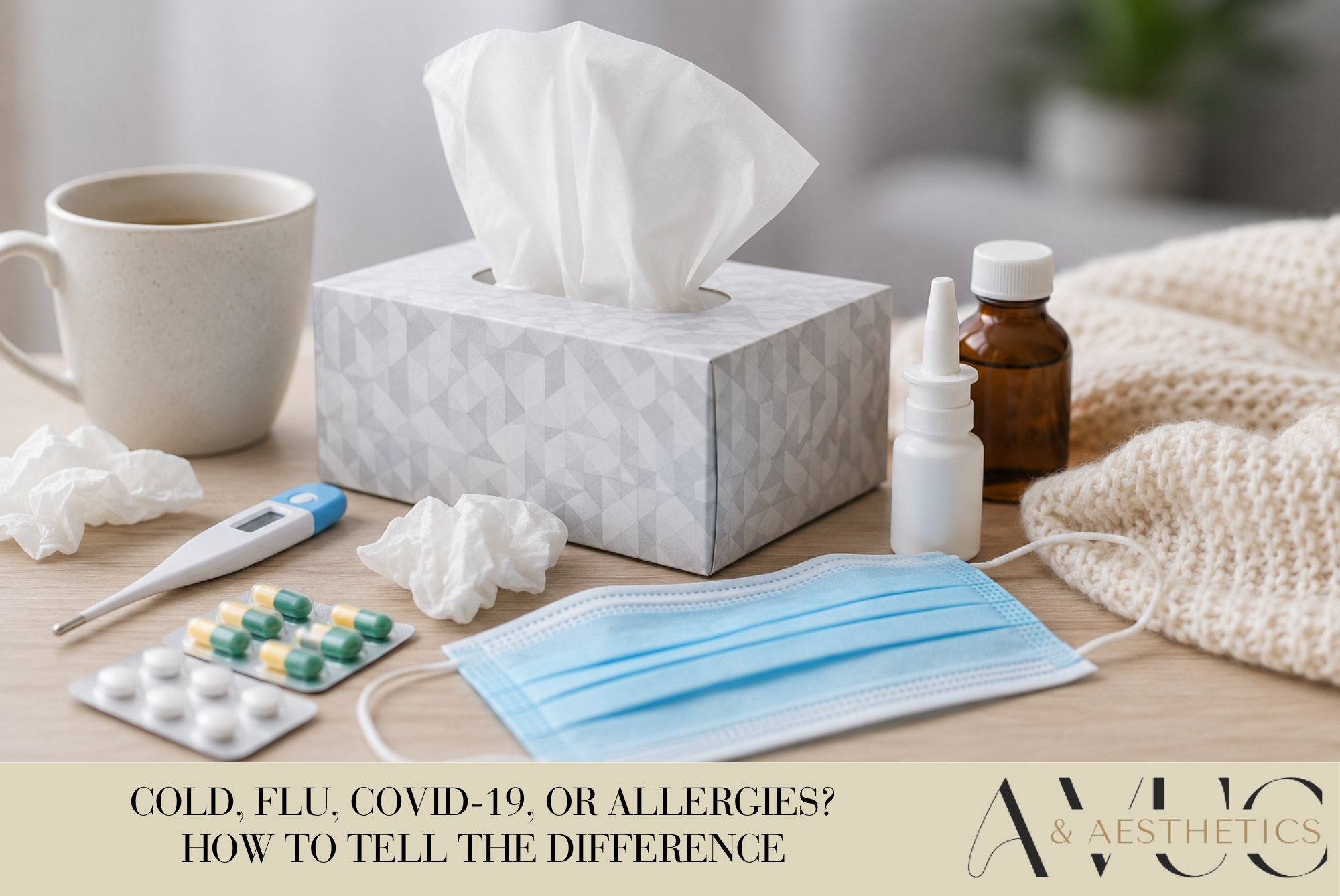
 A runny nose, sore throat, cough, fatigue, and congestion can make it difficult to tell what is actually making you feel unwell. The common cold, influenza (flu), COVID-19, and seasonal allergies can cause overlapping symptoms, but they have different causes and may require different approaches to testing, treatment, and symptom management.
Knowing the typical differences can help you make informed decisions about your health. However, symptoms alone cannot always provide a definite diagnosis. When symptoms are severe, persistent, worsening, or difficult to identify, a medical evaluation may be appropriate.
At Apricot Valley Urgent Care & Aesthetics, patients in Patterson, Modesto, and surrounding Central Valley communities can seek timely evaluation for respiratory symptoms and other non-emergency medical concerns.
Why Colds, Flu, COVID-19, and Allergies Can Feel Similar
These conditions share several symptoms because they can all affect the nose, throat, respiratory system, or overall sense of well-being.
Cold, flu, and COVID-19 are caused by viruses. Seasonal allergies are different: they occur when the immune system reacts to allergens such as pollen, grass, mold, or other environmental triggers.
Because symptoms overlap—and because individual cases can vary—it is not always possible to determine the cause based on one symptom alone. Testing and a clinical evaluation may sometimes be necessary.
Common Cold Symptoms
The common cold is a viral upper respiratory infection. Many different viruses can cause colds, with rhinoviruses among the most common.
What Does a Cold Typically Feel Like?
Cold symptoms usually develop gradually and are often mild to moderate. Common symptoms can include:
- Runny or stuffy nose
- Sneezing
- Sore or scratchy throat
- Cough
- Mild fatigue
- Watery eyes
- Headache
- Mild body aches
A fever can occur with a cold, particularly in children, but high fever is less typical in adults.
How Long Does a Cold Last?
Many uncomplicated colds improve on their own, although symptoms such as coughing or nasal congestion can linger. If symptoms are not improving as expected, become substantially worse, or return after initially improving, medical evaluation can help determine whether another condition or complication may be present.
Flu Symptoms
Influenza is a contagious respiratory illness caused by influenza viruses. Flu symptoms frequently come on more abruptly than typical cold symptoms and may make a person feel significantly more ill.
Common Signs of Influenza
Flu symptoms may include:
- Fever or feeling feverish
- Chills
- Cough
- Sore throat
- Runny or stuffy nose
- Muscle or body aches
- Headache
- Significant fatigue
Some people, especially children, may also experience vomiting or diarrhea. Importantly, not everyone with influenza develops a fever.
Cold vs. Flu: What Is the Main Difference?
The intensity and speed of symptom onset can offer clues. A cold commonly develops gradually and is dominated by nasal and throat symptoms. Influenza can begin suddenly and is more likely to cause prominent fever, chills, body aches, headache, and exhaustion.
These patterns are useful but are not sufficient to confirm a diagnosis.
Why Early Evaluation for Flu Can Matter
Certain prescription antiviral medications work best when started early in the course of influenza. People at increased risk of flu complications or those experiencing significant symptoms should consider contacting a healthcare professional promptly rather than waiting for symptoms to become severe.
COVID-19 Symptoms
COVID-19 is caused by the SARS-CoV-2 virus. Its symptoms can range from very mild to severe, and its presentation can overlap substantially with both the common cold and influenza.
What Are Common COVID-19 Symptoms?
Depending on the individual and circulating virus variants, symptoms may include:
- Fever or chills
- Cough
- Sore throat
- Congestion or runny nose
- Fatigue
- Headache
- Muscle or body aches
- Nausea or vomiting
- Diarrhea
- Shortness of breath or difficulty breathing
- New loss or change in taste or smell
Loss of taste or smell has been associated with COVID-19, but its absence does not rule out infection.
Can You Tell COVID-19 From a Cold or Flu by Symptoms Alone?
Not reliably.
A person with COVID-19 may have congestion and a sore throat that resemble a cold, while another person may experience fever, fatigue, and body aches that resemble influenza. Testing may therefore be an important part of determining whether COVID-19 is causing respiratory symptoms.
Seasonal Allergy Symptoms
Seasonal allergies, sometimes called hay fever or allergic rhinitis, are not caused by a virus and are not contagious. They occur when the immune system reacts to substances in the environment.
Common Signs of Seasonal Allergies
Allergy symptoms can include:
- Sneezing
- Runny nose
- Nasal congestion
- Itchy nose
- Itchy or watery eyes
- Red or irritated eyes
- Postnasal drip
- Throat irritation
- Cough
- Fatigue
Itching—especially itchy eyes, nose, or throat—can be an important clue that allergies may be involved.
Do Seasonal Allergies Cause Fever?
Seasonal allergies do not typically cause fever. A true fever may suggest an infection or another cause rather than uncomplicated seasonal allergies.
Are Allergies Contagious?
No. Unlike colds, influenza, and COVID-19, environmental allergies cannot spread from one person to another.
Cold vs. Flu vs. COVID-19 vs. Allergies: Symptom Comparison
While no symptom chart can replace a medical diagnosis, comparing typical patterns may help you understand what could be causing your symptoms.
Runny or Stuffy Nose
A runny or congested nose can occur with all four conditions. When it occurs alongside frequent sneezing and itchy or watery eyes, allergies may be more likely.
Fever
Fever can occur with influenza and COVID-19. It may occasionally accompany a cold but is less common in adults with uncomplicated colds. Seasonal allergies do not typically cause fever.
Body Aches
Pronounced muscle and body aches are commonly associated with influenza and can also occur with COVID-19. They tend to be less prominent with a cold and are not typical of uncomplicated seasonal allergies.
Itchy and Watery Eyes
Itchy, watery eyes strongly suggest an allergic component, although eye symptoms alone cannot establish a diagnosis.
Sneezing
Sneezing is especially common with allergies and colds. It can also occur with viral respiratory infections, so it should be considered alongside other symptoms.
Fatigue
Fatigue can occur with allergies, colds, influenza, and COVID-19. More substantial or sudden exhaustion is often associated with flu or COVID-19, although experiences vary considerably.
Cough
Cough can occur with a cold, influenza, COVID-19, and allergies. With allergies, coughing may result from postnasal drainage or airway irritation.
Shortness of Breath
Difficulty breathing or shortness of breath requires greater attention. It can occur with COVID-19 and other respiratory illnesses and may also be associated with conditions such as asthma.
Severe difficulty breathing can be a medical emergency and should not be managed as a routine urgent care concern.
Could You Have More Than One Condition at the Same Time?
Yes. Having allergies does not prevent you from developing a viral infection. Likewise, respiratory viruses can circulate at the same time, and coinfections can occur.
For example, someone with seasonal allergies may normally experience sneezing and itchy eyes but then develop new fever, chills, body aches, or significant fatigue. A meaningful change from your usual allergy pattern may warrant closer attention.
When Should You Consider Testing?
Testing may be useful when cold, flu, and COVID-19 symptoms are difficult to distinguish, particularly when the result could affect treatment or precautions around other people.
COVID-19 Testing
Testing can help determine whether SARS-CoV-2 is responsible for symptoms. The appropriate type and timing of testing can depend on your symptoms, exposure history, and current public health recommendations.
A negative test does not always exclude infection, particularly when testing occurs early. Follow current test instructions and healthcare guidance regarding repeat testing when appropriate.
Influenza Testing
Healthcare professionals may recommend influenza testing based on your symptoms, risk factors, local flu activity, and whether the result could affect treatment.
When Should You Visit Urgent Care?
Urgent care can be appropriate for many non-life-threatening illnesses that require timely evaluation but do not require an emergency department.
Consider seeking medical care when:
- Fever is persistent or concerning
- Symptoms are becoming worse instead of better
- You have significant sore throat or difficulty swallowing
- Cough is persistent or worsening
- You have concerning sinus or ear symptoms
- Symptoms improve and then significantly worsen
- You are uncertain whether symptoms are caused by allergies or an infection
- You may have been exposed to influenza or COVID-19
- You have risk factors that increase the possibility of complications
Children, older adults, pregnant patients, immunocompromised individuals, and people with certain chronic health conditions may have different risk considerations. Contacting a healthcare professional earlier may be appropriate for higher-risk patients.
When Is It an Emergency?
Urgent care is not a substitute for emergency medical care.
Seek emergency medical attention for severe or life-threatening symptoms such as significant difficulty breathing, persistent chest pain or pressure, new confusion, inability to stay awake, bluish or gray discoloration of the lips, skin, or nail beds, or other signs of a medical emergency.
When in doubt about a potentially life-threatening condition, call 911 or seek emergency medical care.
What Can You Do at Home for Mild Respiratory Symptoms?
The appropriate treatment depends on the underlying cause, your age, health history, medications, and symptom severity.
Rest and Hydration
Adequate rest and fluids can be helpful while recovering from many viral respiratory illnesses. Fever, decreased appetite, and other symptoms can make maintaining hydration especially important.
Over-the-Counter Symptom Relief
Depending on your individual health circumstances, over-the-counter medications may help relieve fever, aches, congestion, cough, or allergy symptoms.
Not every medication is appropriate for every patient. Ask a healthcare professional or pharmacist about medication safety if you have chronic medical conditions, take prescription medications, are pregnant, or are unsure which products are appropriate.
Reducing Allergy Exposure
When allergies are responsible for symptoms, reducing exposure to known triggers may help. Depending on the allergen, strategies can include monitoring local pollen conditions, keeping windows closed during high-pollen periods, changing clothes after prolonged outdoor exposure, and discussing appropriate allergy medications with a healthcare professional.
Why an Accurate Diagnosis Matters
Although these conditions may initially feel similar, identifying the likely cause can affect what happens next.
A diagnosis may influence whether antiviral treatment is considered, whether testing is recommended, which symptom-relief measures are appropriate, and what precautions should be taken to reduce the chance of spreading an infectious illness.
It can also help identify situations in which symptoms are being caused by something other than a simple viral infection or seasonal allergies.
Respiratory Illness Care in Patterson and Modesto, CA
When you are sick, uncertainty about what is causing your symptoms can make an already uncomfortable situation more stressful.
Apricot Valley Urgent Care & Aesthetics serves patients from locations in Patterson and Modesto, California. Patients experiencing cold-like symptoms, flu symptoms, COVID-19 concerns, allergy symptoms, and other non-emergency health concerns can contact the practice to learn about available evaluation, testing, and treatment services.
If your symptoms are severe or potentially life-threatening, seek emergency medical attention rather than waiting for an urgent care appointment.
Frequently Asked Questions About Colds, Flu, COVID-19, and Allergies
How can I tell whether I have a cold, flu, COVID-19, or allergies?
Consider the complete pattern of symptoms rather than relying on a single symptom. Itchy eyes and frequent sneezing may point toward allergies. Sudden fever, chills, aches, and substantial fatigue can occur with influenza. COVID-19 can resemble either a cold or flu. Because symptoms overlap, testing and clinical evaluation may be needed for a more reliable diagnosis.
Is a runny nose more likely to be COVID-19 or a cold?
A runny nose can occur with both. It can also occur with influenza and seasonal allergies. Other symptoms, recent exposures, local respiratory virus activity, and testing can help clarify the cause.
Does itchy throat mean allergies?
An itchy throat can occur with allergies, particularly when accompanied by sneezing, itchy eyes, and clear nasal drainage. Throat discomfort can also occur with respiratory infections, so persistent or significant symptoms should be evaluated in context.
Can allergies cause a sore throat?
Yes. Postnasal drainage and irritation can make the throat feel scratchy or sore. A severe sore throat, fever, or other significant symptoms may point to another cause and may warrant evaluation.
Can allergies cause body aches?
Seasonal allergies do not typically cause the prominent muscle and body aches commonly associated with influenza and some cases of COVID-19. However, poor sleep and ongoing allergy symptoms can leave a person feeling tired or generally unwell.
Can allergies cause a fever?
Seasonal allergies do not normally cause fever. If you have a measured fever, another cause such as an infection should be considered.
Can you have COVID-19 without a fever?
Yes. Not everyone with COVID-19 develops a fever. The absence of fever does not rule out COVID-19.
Can you have the flu without a fever?
Yes. Although fever is common with influenza, not everyone who develops the flu has a fever.
Is loss of taste or smell always COVID-19?
No. Changes in taste or smell can occur for other reasons, including significant nasal congestion and other illnesses. However, new loss or alteration of taste or smell can occur with COVID-19 and should be considered along with other symptoms and potential exposures.
What is the biggest clue that symptoms are allergies rather than a virus?
Prominent itching of the eyes, nose, or throat, repeated sneezing, symptoms associated with environmental exposures, and the absence of fever can suggest allergies. Your personal history of seasonal symptoms can also provide useful context.
How quickly do flu symptoms start?
Influenza often has a relatively abrupt onset. Someone may feel reasonably well and then develop fever, chills, aches, headache, cough, or significant fatigue over a short period.
Can a cold turn into the flu?
No. A cold does not transform into influenza. They are caused by different viruses. However, symptoms can change over time, and it is possible to encounter different respiratory infections close together.
Can I have allergies and COVID-19 at the same time?
Yes. Allergies do not protect against COVID-19 or other respiratory infections. New symptoms that differ substantially from your normal allergy pattern should not automatically be attributed to allergies.
Should I stay home if I think I have a respiratory virus?
If you are experiencing symptoms of a contagious respiratory illness, taking precautions around other people can help reduce transmission. Because public health recommendations can change, consult current CDC and local public health guidance for the latest recommendations regarding staying home, masking, testing, and returning to normal activities.
When should I see a healthcare provider for cold or flu symptoms?
Consider medical evaluation if symptoms are severe, worsening, unusually persistent, or concerning; if you are at increased risk for complications; or if you are uncertain about the cause. Early evaluation may be especially important when antiviral treatment could be appropriate.
Can urgent care evaluate cold, flu, COVID-19, and allergy symptoms?
Urgent care clinics commonly evaluate non-emergency respiratory and allergy-related symptoms. Available testing and treatment can vary, so contact the clinic or schedule an appointment to confirm the services appropriate for your situation.
When should breathing problems be treated as an emergency?
Severe difficulty breathing, persistent chest pain or pressure, new confusion, inability to stay awake, or other signs of a potentially life-threatening problem require emergency medical attention. Call 911 or seek emergency care rather than relying on a routine urgent care visit.
Contact Information
Apricot Valley Urgent Care & Aesthetics
Patterson Location
1108 Ward Ave, Bldg A, Suite 2
Patterson, CA 95363
Modesto Location
3401 Dale Road, Suite 642-A
Modesto, CA 95356
Phone: (209) 843-0434
Website: avucandaesthetics.com
Appointments: avucandaesthetics.com/appointments
Contact Apricot Valley Urgent Care & Aesthetics or schedule an appointment if you need evaluation for cold, flu, COVID-19, allergy, or other non-emergency symptoms. For severe or life-threatening symptoms, call 911 or seek emergency medical care.