
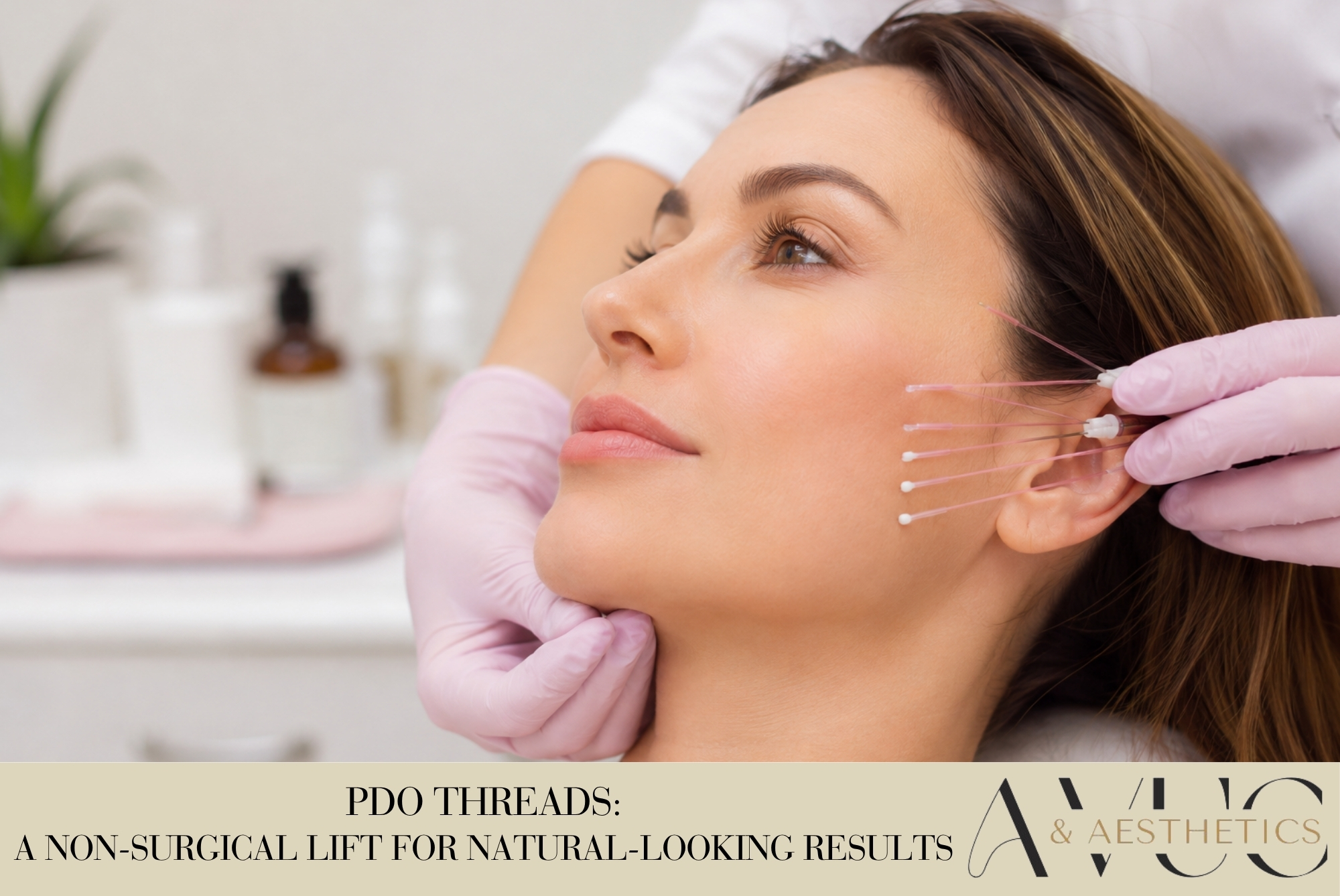
 As the face ages, changes in collagen, skin elasticity, facial volume, and underlying support can contribute to sagging, softer contours, and a less defined appearance. While surgical procedures can address more advanced signs of aging, not everyone wants surgery, extensive downtime, or a dramatic transformation.
PDO thread treatments offer a minimally invasive option for appropriately selected patients who want subtle lifting and improved facial definition without traditional facelift surgery. At Apricot Valley Urgent Care & Aesthetics, patients in Patterson and Modesto, California, can explore aesthetic treatment options designed around their individual anatomy, concerns, and goals.
PDO threads are best understood as a treatment for strategic tissue support and gradual collagen stimulation—not as a replacement for every surgical or nonsurgical procedure. Knowing what PDO threads can and cannot accomplish can help patients make informed decisions and develop realistic expectations.
What Are PDO Threads?
PDO threads are absorbable sutures made from polydioxanone, a material that has a history of medical use in absorbable sutures. In aesthetic medicine, PDO threads may be placed beneath the skin to provide temporary support and, depending on the type of thread and treatment technique, help reposition selected areas of tissue.
The threads gradually break down and are absorbed by the body. During the healing and remodeling process, treatment may also encourage collagen formation around the treated areas.
The goal is generally not to make someone look dramatically different. Instead, PDO thread treatment may be used to create a refreshed, subtly lifted appearance while preserving natural facial characteristics.
How Does a PDO Thread Lift Work?
Immediate Mechanical Support
Certain PDO threads are designed to engage tissue beneath the skin. When appropriately positioned, these threads can provide a lifting or repositioning effect in targeted areas.
Some improvement may therefore be noticeable shortly after treatment, although early swelling and other temporary post-procedure changes can affect how the final result initially appears.
Gradual Collagen Remodeling
Collagen is an important structural protein that helps support the skin. Natural collagen production and organization change with age, contributing to changes in firmness and elasticity.
The presence of PDO threads within the tissue initiates a normal healing response. As the threads are gradually absorbed, collagen remodeling may occur around the treatment area. This means the aesthetic effects of treatment can evolve over time rather than being limited to what is visible immediately after placement.
Absorbable Threads
PDO threads are temporary rather than permanent implants. The material gradually degrades and is absorbed by the body.
The aesthetic result does not necessarily disappear at the exact moment the threads dissolve because tissue remodeling may contribute to the overall outcome. However, PDO thread results are temporary, and individual longevity varies.
What Areas Can PDO Threads Treat?
Jawline
Loss of definition around the lower face can make the jawline appear softer over time. PDO threads may be considered for selected patients seeking improved lower-face contour or subtle tissue repositioning.
Cheeks and Midface
Changes in facial support and volume can contribute to a heavier or less defined midface. Depending on the patient’s anatomy and treatment goals, threads may be used to provide strategic support in this region.
Jowls
Early or moderate tissue laxity along the lower face may contribute to the appearance of jowls. In appropriately selected patients, thread placement may help improve the appearance of these contours.
Brows
Some patients are interested in a subtle lifting effect around the outer brow. PDO threads may be one treatment option considered after evaluating facial anatomy and skin characteristics.
Neck
Skin laxity and changes in tissue support can affect the neck as well as the face. Certain patients may be candidates for PDO thread treatment in this area, although the appropriate approach depends on the degree and cause of the concern.
What Makes PDO Threads Different From a Surgical Facelift?
A PDO thread lift and a surgical facelift are fundamentally different procedures.
Facelift surgery can reposition deeper facial structures, remove or redistribute tissue, address more significant laxity, and generally produce more substantial and longer-lasting changes. It also involves surgery, anesthesia considerations, incisions, and a more extensive recovery.
PDO thread treatment is minimally invasive and typically provides more modest results. It may appeal to patients who have early to moderate concerns, want a subtle change, or are not ready to pursue surgery.
Patients with substantial skin laxity should understand that threads may not reproduce the degree of correction achievable with a surgical facelift. A professional evaluation is important for determining whether PDO threads are appropriate or whether another treatment would better address the patient’s goals.
PDO Threads vs. Dermal Fillers
PDO Threads Address Support and Position
PDO threads are generally used when tissue support, positioning, or mild laxity is a primary concern. Depending on the thread and technique, treatment can help create a subtle lifting effect.
Fillers Primarily Address Volume and Contour
Dermal fillers are injectable products used to add or restore volume, enhance specific contours, or soften the appearance of certain lines and folds.
Because aging can involve both tissue descent and volume changes, some patients may benefit from a treatment plan involving more than one aesthetic modality. Combining treatments is not automatically appropriate for everyone, however. Timing, anatomy, product selection, and individual risk factors should be evaluated by a qualified healthcare professional.
What Are the Potential Benefits of PDO Threads?
For suitable candidates, potential advantages of PDO thread treatment may include:
- Minimally invasive treatment
- No traditional facelift incisions
- Subtle tissue lifting or repositioning
- Improved appearance of selected facial contours
- Collagen remodeling as the tissue responds to treatment
- Results intended to look natural rather than dramatically altered
- Generally less recovery than surgical facial rejuvenation
Individual experiences and outcomes vary, and no aesthetic procedure can guarantee a particular result.
Who May Be a Good Candidate for PDO Threads?
Patients With Mild to Moderate Laxity
PDO threads are often better suited to people experiencing early or moderate changes in tissue support rather than severe skin laxity.
Patients Seeking Subtle Results
Someone looking for a refreshed appearance rather than a major transformation may find the treatment concept appealing.
Patients With Realistic Expectations
A successful aesthetic treatment plan begins with understanding the limitations as well as the potential benefits of a procedure. PDO threads cannot stop aging and do not produce the same degree of correction as facelift surgery.
Patients Who Are Medically Appropriate for Treatment
A consultation is necessary to review health history, medications, previous aesthetic treatments, allergies, skin condition, and other factors that may influence candidacy or procedural risk.
Not everyone is an appropriate candidate for PDO threads.
What Happens During a PDO Thread Consultation?
An aesthetic consultation should involve more than simply deciding how many threads to place.
A healthcare professional may evaluate facial anatomy, skin quality, tissue laxity, facial proportions, areas of volume loss, medical history, previous procedures, and the patient’s desired outcome.
This evaluation helps determine whether PDO threads are likely to provide a worthwhile improvement. In some cases, another treatment—or a combination of treatments—may be more appropriate.
Patients should also have an opportunity to discuss expected results, recovery, possible adverse effects, treatment limitations, and alternatives before deciding whether to proceed.
What Happens During PDO Thread Treatment?
The exact procedure depends on the treatment area, thread type, and individualized treatment plan.
The skin is typically cleansed and prepared, and local anesthetic may be used to improve comfort. Threads are then introduced beneath the skin along carefully selected treatment vectors.
Once appropriately positioned, certain thread designs can engage tissue and provide support or repositioning. The procedure is performed without the larger surgical incisions associated with facelift surgery.
Treatment time varies according to the number and location of threads and the complexity of the treatment plan.
Is PDO Thread Treatment Painful?
Comfort levels vary among patients. Local anesthetic is commonly used, but patients may still experience sensations such as pressure, pulling, tenderness, or tightness during or after treatment.
Temporary soreness or sensitivity can occur as the treated tissue heals.
Patients concerned about discomfort should discuss pain management and what to expect with their provider before undergoing treatment.
What Is Recovery Like After PDO Threads?
One reason patients consider PDO threads is that recovery is generally less extensive than recovery from facelift surgery. However, minimally invasive does not mean there is no recovery period.
Common Temporary Effects
After treatment, patients may experience temporary swelling, bruising, tenderness, tightness, mild asymmetry, or skin irregularities around treated areas. These effects often improve as healing progresses.
Your provider may give specific instructions regarding facial movements, exercise, sleeping position, skincare, makeup, dental appointments, or other activities during the early healing period.
Following individualized aftercare instructions is important.
When to Contact Your Provider
Patients should contact their healthcare provider if they experience symptoms that are severe, unexpected, worsening, or otherwise concerning after treatment.
Your provider should explain specific warning signs and how to obtain medical assistance as part of the treatment and aftercare process.
When Will PDO Thread Results Be Visible?
Some lifting or contour improvement may be apparent soon after treatment, depending on the technique and treatment area.
Early results should not necessarily be considered final. Swelling, tightness, and tissue adjustment can temporarily influence appearance. As healing progresses and collagen remodeling occurs, the treated area may continue to change.
Follow-up appointments allow the provider to evaluate healing and the developing result.
How Long Do PDO Thread Results Last?
PDO thread results are temporary.
How long an individual result remains noticeable depends on multiple factors, including age, skin characteristics, degree of laxity, treatment area, thread selection, placement technique, lifestyle, and the body’s individual healing and remodeling response.
Because results vary, patients should be cautious of claims promising an exact duration for every person.
During a consultation at Apricot Valley Urgent Care & Aesthetics, patients can discuss expectations based on their specific treatment plan.
Will PDO Threads Make My Face Look Unnatural?
The purpose of a thoughtfully planned PDO thread treatment is generally subtle improvement rather than dramatic alteration.
Natural-looking aesthetic treatment depends on appropriate patient selection, knowledge of facial anatomy, conservative planning, and realistic treatment goals.
The objective may be to improve contours or reposition selected tissues while maintaining the patient’s recognizable facial characteristics.
What Are the Risks and Side Effects of PDO Threads?
PDO thread treatment is a medical aesthetic procedure and carries potential risks.
Possible effects and complications can include swelling, bruising, tenderness, discomfort, temporary asymmetry, skin dimpling or irregularity, infection, visible or palpable threads, thread migration or extrusion, inflammatory reactions, and unsatisfactory cosmetic results. Other complications may also occur.
The likelihood and significance of complications vary according to the patient, treatment area, technique, and other factors.
A qualified provider should discuss relevant risks, benefits, alternatives, and post-treatment instructions before treatment.
Can PDO Threads Be Combined With Other Aesthetic Treatments?
Potentially. A comprehensive aesthetic plan may incorporate different treatments because individual concerns can arise from different aspects of facial aging.
For example, threads may focus on tissue support while other procedures address volume, skin texture, pigmentation, dynamic wrinkles, or other concerns.
Combination therapy should be individualized. Certain procedures may need to be performed in a particular sequence or separated by an appropriate interval.
Rather than assuming more treatment will produce a better result, patients should work with their provider to determine which procedures are actually appropriate.
How Can I Prepare for a PDO Thread Appointment?
Preparation recommendations depend on your medical history and planned treatment.
Before the procedure, provide your healthcare professional with an accurate list of medications, supplements, allergies, medical conditions, and previous cosmetic procedures.
Do not independently stop prescription medications or make medical changes simply to prepare for an aesthetic procedure. Your healthcare provider can advise you about any treatment-specific precautions that are appropriate for you.
Why Provider Selection Matters for PDO Threads
PDO thread treatment involves placing medical devices beneath the skin in anatomically sensitive areas. Facial anatomy, treatment planning, sterile technique, thread selection, placement depth, and management of potential complications all matter.
An appropriate aesthetic assessment should also recognize when PDO threads are unlikely to provide the desired result.
Patients should choose a qualified healthcare professional who can explain not only what a procedure may accomplish but also its limitations, alternatives, risks, and expected recovery.
PDO Threads in Patterson and Modesto, California
Patients considering nonsurgical facial rejuvenation can schedule a consultation with Apricot Valley Urgent Care & Aesthetics in Patterson or Modesto.
A personalized consultation provides an opportunity to discuss areas of concern, desired changes, medical considerations, and whether PDO threads are an appropriate treatment option.
Rather than pursuing a one-size-fits-all approach, aesthetic care should be based on individual anatomy and realistic objectives.
Frequently Asked Questions About PDO Threads
What exactly is a PDO thread lift?
A PDO thread lift is a minimally invasive aesthetic procedure that places absorbable polydioxanone threads beneath the skin. Depending on the type of threads and placement technique, they may provide temporary tissue support or repositioning while also contributing to collagen remodeling during the healing process.
Are PDO threads the same as a facelift?
No. PDO threads do not provide the same degree of tissue repositioning or skin correction as surgical facelift procedures. Thread treatments generally produce more subtle results and involve substantially different techniques and recovery considerations.
Who should consider PDO threads?
PDO threads may be considered by adults with appropriate skin and tissue characteristics who want subtle facial lifting or contour improvement without traditional facelift surgery. Candidacy requires an individualized assessment.
Can PDO threads help with jowls?
For selected patients with mild to moderate lower-face laxity, PDO threads may help improve the appearance of jowling or lower-face contours. Results depend heavily on anatomy and the degree of tissue laxity.
Can PDO threads define the jawline?
PDO threads may be used as part of a treatment plan intended to improve jawline definition in appropriate candidates. Other causes of reduced jawline definition, including volume distribution and significant skin laxity, may require different approaches.
How quickly will I see results?
Some changes may be visible shortly after treatment. However, swelling and tissue adjustment can affect the early appearance, and results may continue to evolve during healing and collagen remodeling.
Are PDO thread results permanent?
No. PDO threads are absorbable, and their aesthetic effects are temporary. The duration of visible improvement differs among patients.
Do PDO threads stimulate collagen?
The placement of PDO threads produces a tissue response as part of the normal healing process, which may include collagen formation and remodeling around the treatment area.
Do the threads have to be removed later?
PDO threads are designed to gradually degrade and be absorbed by the body, so routine surgical removal is generally not part of the treatment process.
Is there downtime after a PDO thread lift?
Some recovery should be expected. Swelling, bruising, tenderness, tightness, or temporary irregularities can occur. Your provider will give you instructions about activities and precautions during healing.
Can I exercise immediately after PDO threads?
Your provider may recommend temporarily modifying strenuous exercise and certain activities following treatment. Follow the specific aftercare instructions provided for your procedure rather than assuming your usual activities can immediately resume.
Can I sleep normally after PDO threads?
Providers may recommend adjustments to sleeping position during early recovery to minimize pressure on treated areas. Follow the instructions provided after your procedure.
Can PDO threads replace dermal filler?
Not necessarily. Threads and fillers serve different purposes. Threads can be used for tissue support or repositioning, while fillers primarily add or restore volume and alter contours. The appropriate treatment depends on what is causing the patient’s aesthetic concern.
Can I have fillers and PDO threads?
Some patients may be candidates for both, but treatment sequence and timing should be determined by the healthcare professional developing the aesthetic plan.
What happens when PDO threads dissolve?
The thread material gradually breaks down and is absorbed. Tissue remodeling that occurred during the healing response may contribute to the appearance after the threads themselves have degraded, although the overall aesthetic result remains temporary.
What age is best for PDO threads?
There is no single ideal age. Candidacy is based more on facial anatomy, skin quality, degree of laxity, health status, and treatment goals than on chronological age alone.
Are PDO threads suitable for severe loose skin?
PDO threads may not provide sufficient correction for significant skin and tissue laxity. Patients seeking substantial lifting may need to discuss surgical or other treatment options with an appropriately qualified professional.
Are PDO threads safe?
PDO threads have established medical applications as absorbable suture material, but aesthetic thread placement still carries risks and potential complications. Safety depends on factors including patient selection, anatomy, technique, sterile practices, and appropriate management of complications.
How many PDO threads will I need?
There is no universal number. Thread selection and quantity depend on the treatment area, facial anatomy, degree of laxity, desired outcome, and provider’s treatment strategy. An individualized consultation is necessary.
How do I know whether PDO threads are right for me?
The best way to determine candidacy is through an in-person evaluation with a qualified healthcare professional. The consultation should consider your concerns, anatomy, medical history, expectations, and available alternatives before recommending treatment.
Schedule a PDO Thread Consultation
If you are interested in subtle facial rejuvenation without traditional facelift surgery, a consultation can help determine whether PDO threads align with your goals.
Apricot Valley Urgent Care & Aesthetics serves patients from Patterson, Modesto, and surrounding California communities. During your consultation, your provider can assess your individual concerns, explain appropriate aesthetic options, and help you understand expected benefits, limitations, recovery, and potential risks.
Contact Information
Apricot Valley Urgent Care & Aesthetics
Patterson Location
1108 Ward Ave, Bldg A, Suite 2
Patterson, CA 95363
Modesto Location
3401 Dale Road, Suite 642-A
Modesto, CA 95356
Phone: (209) 843-0434
Website: avucandaesthetics.com
Appointments: avucandaesthetics.com/appointments