
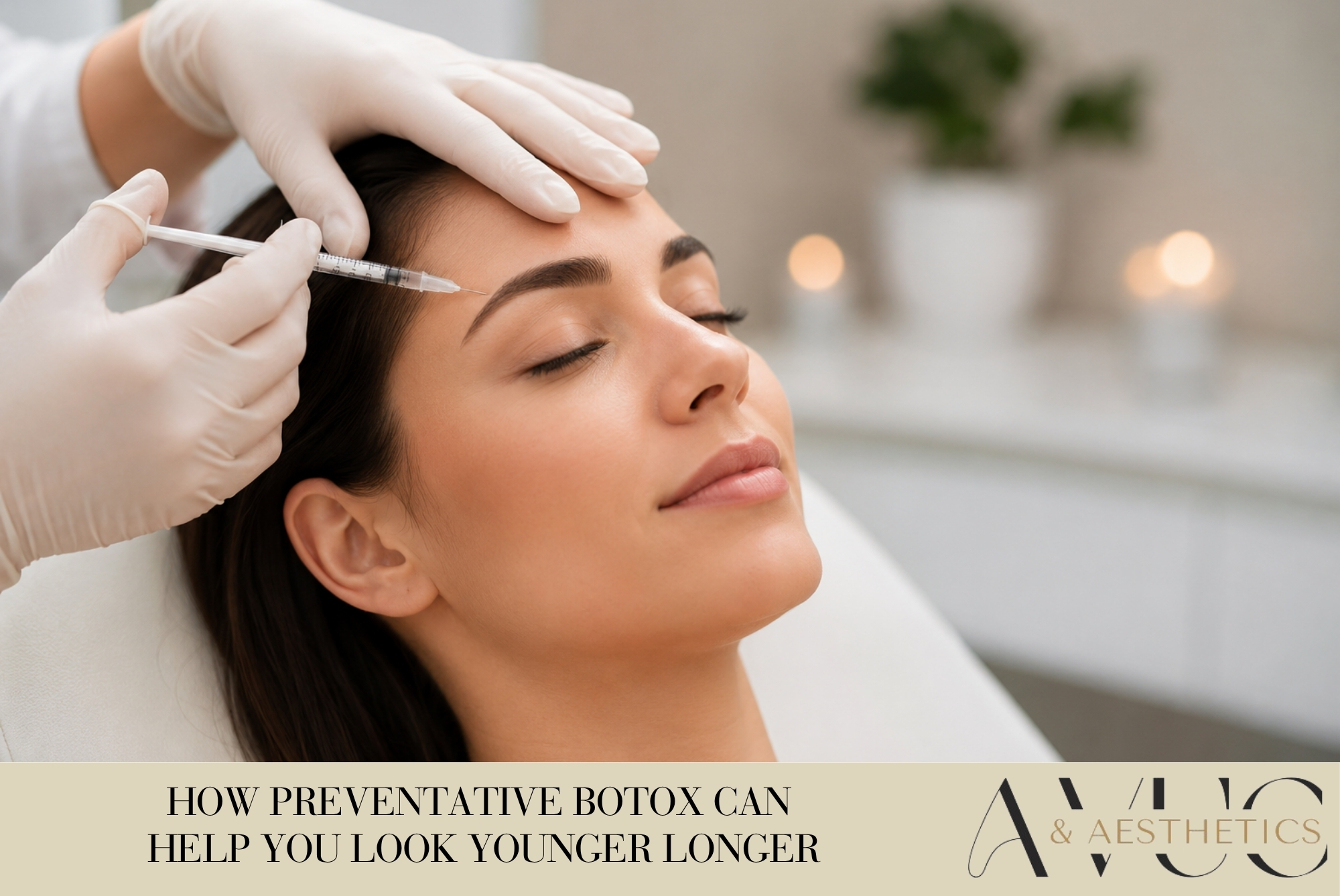
 Fine lines and wrinkles are a natural part of aging, but some of the earliest facial lines develop because of something we do every day: make expressions. Smiling, squinting, frowning, and raising the eyebrows repeatedly contract facial muscles and temporarily fold the skin. Over time, these repeated movements can contribute to expression lines becoming more noticeable.
Preventative Botox is an aesthetic approach designed to address these dynamic facial lines before they become more deeply established. Rather than waiting until wrinkles are prominent at rest, some adults choose Botox Cosmetic treatments when expression-related lines are beginning to appear.
At Apricot Valley Urgent Care & Aesthetics, patients in Patterson and Modesto, California, can receive an individualized aesthetic consultation to discuss Botox, their cosmetic goals, facial anatomy, and whether treatment is appropriate for them.
What Is Preventative Botox?
“Preventative Botox” generally refers to using Botox Cosmetic earlier in the development of expression lines, with the goal of temporarily reducing repetitive muscle activity that contributes to visible wrinkles.
Botox Cosmetic contains onabotulinumtoxinA, a neuromodulator. When appropriately injected into selected facial muscles, it temporarily reduces muscle activity. This can soften dynamic wrinkles—the lines most noticeable when you smile, squint, frown, or raise your eyebrows.
The American Academy of Dermatology explains that botulinum toxin injections temporarily relax targeted muscles, causing fine lines and wrinkles to diminish. Effects generally last approximately three to four months, although individual results vary.
Preventative Botox does not stop the natural aging process, and it cannot guarantee that future wrinkles will never develop. Instead, the rationale is to reduce the repetitive muscular contractions involved in forming certain expression-related lines.
Dynamic Wrinkles vs. Static Wrinkles
Understanding the difference between dynamic and static wrinkles helps explain why some patients consider preventative Botox.
Dynamic wrinkles appear primarily during facial movement. Examples include forehead lines when raising the eyebrows, crow’s feet while smiling or squinting, and vertical lines between the eyebrows when frowning.
Static wrinkles remain visible even when the face is relaxed. Over time, repeatedly folding the skin in the same locations can contribute to expression lines becoming increasingly established. Skin aging, genetics, cumulative sun exposure, smoking, changes in collagen and elastin, and other factors can also influence the development of facial wrinkles.
Botox primarily targets the muscular component of expression-related wrinkles. By temporarily decreasing contraction of selected muscles, treatment can reduce the repeated folding responsible for certain dynamic lines.
How Does Preventative Botox Work?
Botox works by temporarily interfering with nerve signals that cause targeted muscles to contract. When those muscles contract less strongly, the overlying skin folds less during facial expressions.
For someone whose forehead lines, frown lines, or crow’s feet are beginning to become noticeable, carefully planned treatment may soften these lines while temporarily reducing the repetitive movement that contributes to them.
The objective of a conservative treatment plan is generally not to eliminate every facial expression. Appropriate dosing and injection placement can allow patients to retain natural movement while reducing selected muscle activity.
Because facial anatomy, muscle strength, skin characteristics, and aesthetic preferences differ from person to person, Botox treatment should be customized rather than approached as a standardized procedure.
How Preventative Botox May Help You Maintain a Younger-Looking Appearance
Preventative Botox is primarily intended to address wrinkles associated with repeated facial movement.
When dynamic wrinkles are treated before they become deeply established at rest, reducing repetitive muscular contraction may help keep those particular expression lines less prominent during the period that Botox remains effective.
Clinical research has demonstrated improvement in dynamic upper-facial wrinkles following botulinum toxin type A treatment. Research has also explored changes in fine wrinkles, skin texture, and other measures of skin quality after treatment. However, evidence should not be interpreted to mean that beginning Botox at a particular age will permanently prevent facial aging.
The most realistic goal is maintenance: temporarily controlling selected expression lines as part of a broader, individualized approach to aesthetic care.
What Areas Can Botox Treat?
Botox Cosmetic is commonly associated with treatment of expression-related lines in the upper face. Depending on the patient’s anatomy, concerns, product labeling, and clinician’s assessment, treatment discussions may include areas such as:
Forehead lines that become noticeable when raising the eyebrows.
Glabellar lines, sometimes called “11 lines,” that develop between the eyebrows with frowning.
Crow’s feet, or lateral canthal lines, that become visible around the outer corners of the eyes when smiling or squinting.
Not every wrinkle should be treated in the same way. Some concerns may be related more to skin quality, volume loss, sun damage, or other aspects of aging than muscular activity. A consultation helps determine what is contributing to the patient’s specific concern.
What Is the Best Age to Start Preventative Botox?
There is no universal “best age” to begin Botox.
Preventative treatment should be based on the individual rather than a birthday. Two people of the same age may have very different facial anatomy, muscle strength, sun exposure histories, genetics, skin characteristics, and degrees of dynamic wrinkling.
Instead of asking whether everyone should start Botox in their 20s or 30s, a more useful question is whether a patient’s expression patterns and aesthetic concerns make them an appropriate candidate for treatment.
Someone who has little or no visible dynamic wrinkling may not benefit from starting treatment simply because they have reached a particular age.
A professional consultation is the appropriate way to determine whether treatment makes sense for an individual’s goals.
Does Starting Botox Earlier Mean You Need Less Botox?
Not necessarily.
The amount of Botox appropriate for a patient depends on factors including the treatment area, muscle strength, facial anatomy, desired degree of movement, previous treatments, and the clinician’s assessment.
“Preventative” should not automatically be interpreted as meaning a specific low dose.
A personalized treatment plan is preferable to choosing the number of units based solely on age or what another patient receives.
Will Preventative Botox Make My Face Look Frozen?
A frozen appearance is not an unavoidable result of Botox.
Botulinum toxin treatment can be performed with the intention of softening selected muscle activity while preserving natural facial expression. The American Academy of Dermatology notes that clinicians can inject enough product to weaken and relax targeted muscles without necessarily affecting other muscles, helping patients maintain natural expressions.
The desired amount of movement is also personal. Some patients prefer greater movement, while others want stronger correction of particular expression lines. Discussing these preferences before treatment helps establish realistic goals.
How Long Does Botox Last?
Botulinum toxin treatment for facial wrinkles is temporary.
According to the American Academy of Dermatology, improvements commonly last approximately three to four months and sometimes longer. Individual duration varies.
Factors such as the treatment area, dosage, muscle activity, metabolism, and individual response can affect how long results remain noticeable.
When the effects gradually wear off, muscle activity returns and expression lines may become more noticeable again.
How Quickly Will I See Botox Results?
Botox does not generally produce its complete cosmetic effect immediately after injection.
The American Academy of Dermatology reports that many patients see results within approximately three to seven days. The exact onset and final appearance can vary among individuals.
Patients should follow the specific aftercare and follow-up recommendations provided by their treating clinician.
What Happens If I Stop Preventative Botox?
Botox is temporary, so choosing to stop treatment does not mean that you must continue indefinitely.
As the medication’s effects wear off, the treated muscles gradually regain activity. Expression-related lines can subsequently become noticeable again.
Stopping Botox does not mean that every patient will suddenly develop dramatically worse wrinkles. Normal aging, facial movement, genetics, sun exposure, skin care, and other factors continue to influence how the face changes over time.
Is Preventative Botox Permanent?
No.
Botox temporarily reduces activity in the treated muscles. Maintaining the cosmetic effect generally requires additional treatments after the previous treatment has worn off.
This temporary nature can be beneficial because treatment plans can be reassessed and adjusted as facial anatomy, preferences, and aesthetic goals change.
Can Preventative Botox Stop Aging?
No cosmetic injectable can stop aging.
Facial aging is complex and involves far more than muscle movement. Over time, the skin undergoes changes in collagen, elasticity, thickness, hydration, pigmentation, and texture. Facial fat, bone structure, and other tissues can change as well.
Botox specifically addresses selected muscle activity and expression-related wrinkles. It does not prevent every biological process involved in facial aging.
For this reason, Botox should be considered one potential component of an aesthetic strategy rather than a replacement for comprehensive skin care and healthy lifestyle choices.
Botox and Sun Protection: Why Both Matter
One of the most important distinctions in preventative aesthetics is that Botox and sunscreen address different contributors to skin aging.
Botox reduces selected muscular activity. Sunscreen helps protect the skin against ultraviolet radiation, a major contributor to premature skin aging.
Someone interested in maintaining younger-looking skin should therefore think beyond injectable treatments alone. Daily sun protection and an appropriate skin-care routine can remain important regardless of whether a person chooses Botox.
A clinician can help patients understand how aesthetic treatments and at-home skin care may complement one another.
Is Preventative Botox Right for Everyone?
No.
An aesthetic treatment should be recommended because it is appropriate for the individual—not simply because it is popular or trending on social media.
A consultation should consider the patient’s medical history, medications, facial anatomy, muscle activity, existing lines, expectations, and desired outcome.
Patients should also tell their clinician about previous botulinum toxin treatments and any medications, supplements, medical conditions, pregnancy or breastfeeding considerations, allergies, or previous reactions that could affect treatment decisions.
What Are the Possible Side Effects of Botox?
Botox is a medical treatment and has potential side effects and risks.
Depending on the treatment area and individual circumstances, possible effects can include injection-site discomfort, redness, swelling, bruising, headache, temporary facial asymmetry, eyelid or eyebrow changes, and other adverse reactions.
Botulinum toxin products also carry important prescribing information, contraindications, precautions, and warnings. Rare but serious complications can occur.
Patients should receive individualized counseling about risks, benefits, alternatives, and appropriate aftercare before deciding to proceed.
Why Provider Experience Matters
Botox treatment involves much more than placing injections where a wrinkle is visible.
Facial muscles interact with one another, and treatment of one muscle can influence the appearance and movement of surrounding areas. Understanding facial anatomy, muscle balance, dosing, injection placement, and the patient’s desired outcome is essential when developing a treatment plan.
This is especially important with preventative treatment, where the goal may be subtle reduction of unwanted lines while maintaining natural expression.
What Should I Expect During a Botox Consultation?
A Botox consultation is an opportunity to discuss what you notice about your appearance and what you would like to change.
Your clinician may evaluate your face both at rest and during expressions such as smiling, squinting, frowning, and raising your eyebrows. This helps distinguish dynamic lines from lines that remain visible at rest.
You can also discuss how much facial movement you would like to preserve, previous aesthetic treatments, expected results, possible risks, and how frequently treatment might be considered.
A consultation does not mean you are required to proceed with injections. It is an opportunity to determine whether Botox is appropriate for you.
How Preventative Botox Fits Into a Long-Term Aesthetic Plan
The most effective aesthetic plan is not necessarily the one involving the greatest number of treatments. It is one that addresses the patient’s actual concerns and evolves as those concerns change.
For some adults, Botox may be used periodically to manage expression-related wrinkles. Other aspects of maintaining healthy-looking skin can include sun protection, appropriate topical skin care, healthy lifestyle habits, and other professionally recommended treatments when indicated.
The objective should be a personalized plan based on anatomy, evidence, safety, and realistic expectations rather than automatically following a treatment schedule based on age.
Preventative Botox in Patterson and Modesto, California
For patients considering preventative Botox in Patterson, Modesto, and surrounding Central Valley communities, Apricot Valley Urgent Care & Aesthetics offers convenient locations for aesthetic consultations.
Whether you have started noticing forehead lines, frown lines, crow’s feet, or simply want to learn more about your options, an individualized consultation can help determine whether Botox is appropriate for your concerns.
The decision to begin cosmetic treatment is personal. Understanding what Botox can—and cannot—do is an important first step toward making an informed choice.
Frequently Asked Questions About Preventative Botox
What is preventative Botox?
Preventative Botox generally describes using Botox Cosmetic to temporarily reduce selected facial muscle activity when expression-related lines are beginning to develop, rather than waiting until those lines become more established.
Does preventative Botox actually prevent wrinkles?
Botox can temporarily reduce the muscle contractions responsible for certain dynamic expression lines. This may help limit repeated folding of the skin while the medication is active. However, it cannot prevent all wrinkles or stop natural aging, and long-term evidence does not support guaranteeing that early Botox will permanently prevent future wrinkles.
What age should I start preventative Botox?
There is no single recommended age that applies to everyone. Treatment decisions should be based on facial anatomy, muscle activity, visible lines, medical history, aesthetic goals, and a professional assessment rather than age alone.
Is 20 too young for preventative Botox?
Age alone does not determine whether Botox is appropriate. Younger adults without meaningful dynamic lines may have little reason to begin cosmetic injections. Anyone considering treatment should have an individualized consultation rather than starting solely because preventative Botox is popular.
Is 30 a good age to start Botox?
Some people first notice persistent expression lines in their late 20s or 30s, but there is no universally correct starting age. A clinician can assess whether your specific lines and facial movement are suitable for Botox treatment.
What wrinkles does Botox work best on?
Botox is primarily used for dynamic wrinkles associated with muscle movement, including certain forehead lines, glabellar or frown lines, and crow’s feet.
Can Botox remove deep wrinkles?
Reducing underlying muscle activity may soften some established lines, but deeply etched static wrinkles can involve additional changes in the skin. Their management may require a different or combined aesthetic approach.
How long does preventative Botox last?
Results commonly last approximately three to four months, although duration varies from patient to patient.
How often do I need preventative Botox?
There is no schedule appropriate for every patient. Retreatment should be based on the individual’s response, return of muscle activity, treatment goals, clinical assessment, and applicable product guidance.
Will I need more Botox if I start young?
Not necessarily. Future dosing depends on your anatomy, muscle activity, treatment areas, goals, and response. Starting earlier does not guarantee that you will need either more or less product over your lifetime.
Does Botox make wrinkles worse when it wears off?
When Botox wears off, muscle activity gradually returns and expression lines may become noticeable again. This should not be confused with Botox automatically making wrinkles worse.
Can Botox look natural?
Yes, a natural-looking result can be a treatment goal. Appropriate injection placement and individualized dosing can reduce targeted muscle activity while preserving movement in other facial muscles.
Can I still make facial expressions after Botox?
The amount of movement remaining depends on the treatment plan, dosage, areas treated, and individual response. Patients who want to preserve substantial facial expression should discuss that preference with their clinician.
How quickly does Botox start working?
Many patients begin noticing changes within several days. The American Academy of Dermatology reports that results are often visible within approximately three to seven days, although individual responses vary.
Is Botox the same as dermal filler?
No. Botox is a neuromodulator that temporarily reduces selected muscle activity. Dermal fillers are injectable products used to address concerns such as volume, contour, or certain folds. They work through different mechanisms.
Does Botox replace a good skin-care routine?
No. Botox primarily addresses muscle-related expression lines. It does not replace sunscreen or an appropriate skin-care routine designed to address other contributors to skin aging.
Should I get preventative Botox if I do not have wrinkles?
Not automatically. If you have little or no dynamic wrinkling, a clinician may determine that treatment is unnecessary. Cosmetic treatment should be based on an individual assessment and your personal goals.
Is preventative Botox only for women?
No. Expression-related wrinkles can affect adults of any gender, and treatment plans are based on individual facial anatomy, muscle activity, and aesthetic goals.
What should I tell my provider before Botox?
Discuss your medical history, medications and supplements, allergies, previous botulinum toxin treatments, previous reactions, and other information requested by your clinician. This allows the provider to determine whether treatment is appropriate and discuss relevant risks.
How do I know whether preventative Botox is right for me?
The best way to find out is through an individualized aesthetic consultation. A clinician can evaluate your facial movement and existing lines, review your medical history, discuss your goals, and explain the potential benefits, limitations, risks, and alternatives.
Where can I schedule preventative Botox near Patterson or Modesto, CA?
Patients interested in Botox and aesthetic services can contact Apricot Valley Urgent Care & Aesthetics or request an appointment online. The practice has locations in Patterson and Modesto, California.
Contact Information
Apricot Valley Urgent Care & Aesthetics
Patterson Location
1108 Ward Ave, Bldg A, Suite 2
Patterson, CA 95363
Modesto Location
3401 Dale Road, Suite 642-A
Modesto, CA 95356
Phone: (209) 843-0434
Website: avucandaesthetics.com
Appointments: avucandaesthetics.com/appointments