
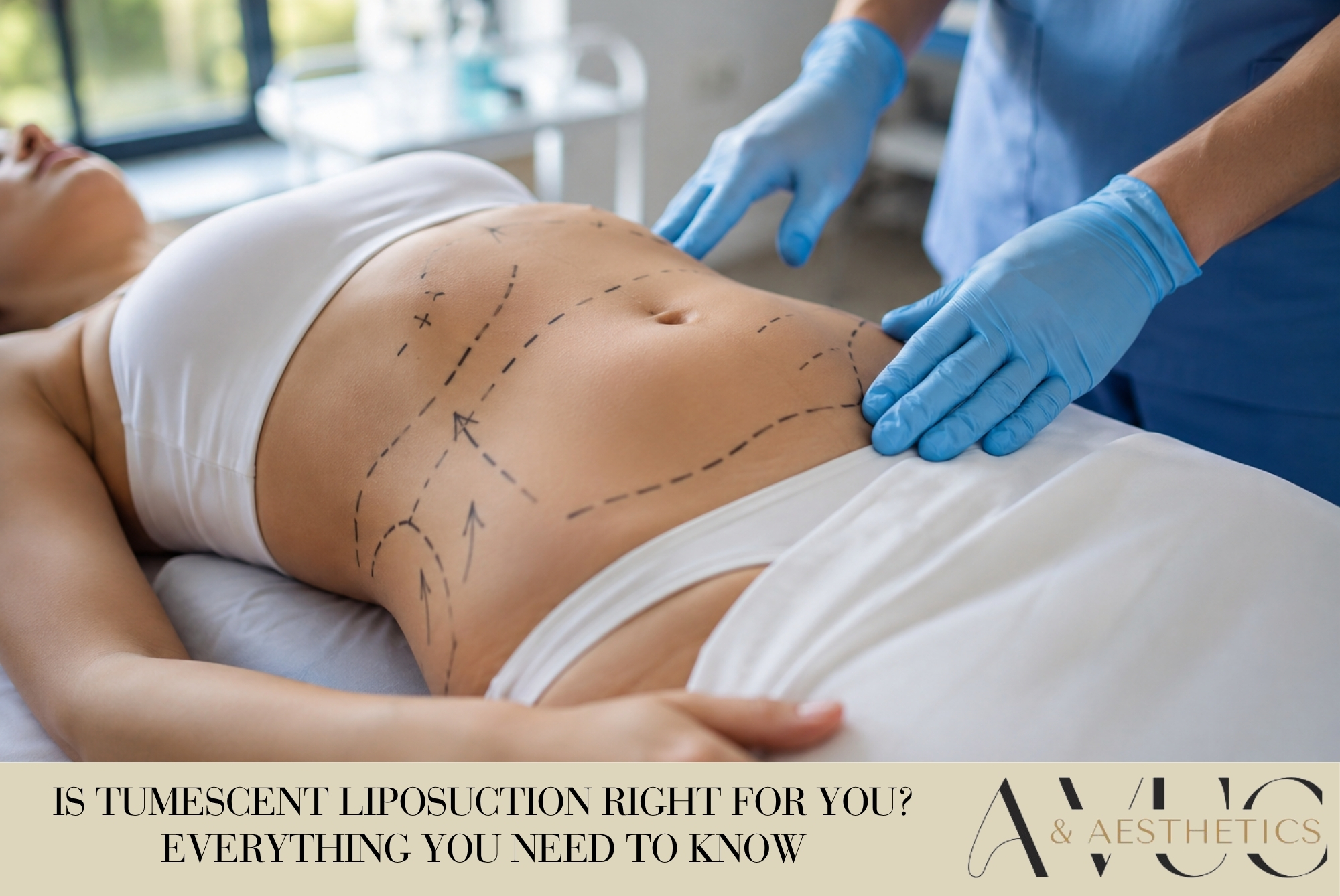
 If you have areas of stubborn fat that remain despite healthy eating and regular exercise, you may be exploring body contouring treatments such as tumescent liposuction. Tumescent liposuction is a technique designed to remove localized fat deposits while using a specialized solution containing local anesthetic and other medications to prepare the treatment area.
At Apricot Valley Urgent Care & Aesthetics, patients in Patterson, Modesto, and surrounding Central Valley communities can discuss their aesthetic goals with a qualified healthcare professional and determine whether tumescent liposuction may be an appropriate option.
Understanding what tumescent liposuction can—and cannot—accomplish is an important first step. This guide explains how the procedure works, potential benefits and risks, recovery expectations, candidacy considerations, and questions to ask before deciding whether treatment is right for you.
What Is Tumescent Liposuction?
Tumescent liposuction is a form of liposuction in which a relatively large volume of diluted anesthetic solution is introduced into the fatty tissue before fat removal.
The word “tumescent” refers to tissue becoming swollen and firm after the solution is administered. The solution typically contains a local anesthetic such as lidocaine and a medication such as epinephrine that constricts blood vessels. The exact formulation and amounts depend on the patient’s circumstances and the clinician’s treatment protocol.
Once the treatment area has been prepared, a thin tube called a cannula is inserted through small incisions. The clinician uses the cannula and suction to remove targeted fat and contour the treatment area.
How Does Tumescent Liposuction Work?
The procedure generally involves several stages.
First, the patient is evaluated to determine whether liposuction is appropriate and which areas should be treated. The treatment area is then marked according to the planned contours.
Next, the tumescent solution is carefully introduced into the fatty tissue. This helps anesthetize the treatment area while causing blood vessels to constrict. After the tissue has become adequately tumescent, small incisions are made so the cannula can be inserted.
The clinician then moves the cannula through the targeted fatty tissue while suction removes fat cells. The goal is not simply to remove as much fat as possible but to create smoother, more proportionate contours.
The specific technique, duration of treatment, medications, monitoring, and recovery instructions vary according to the patient’s health, treatment area, and extent of the procedure.
Tumescent Liposuction vs. Traditional Liposuction
“Tumescent” describes the method of infiltrating the treatment area with a dilute local anesthetic solution. Modern liposuction procedures commonly incorporate some form of tumescent infiltration, so the distinction between “tumescent” and “traditional” liposuction is not always as simple as comparing two completely separate procedures.
The appropriate technique depends on factors including the amount and location of fat being treated, the patient’s medical history, the anticipated procedure length, and whether additional anesthesia or sedation is appropriate.
A consultation is therefore more useful than choosing a liposuction method based solely on terminology.
What Areas Can Tumescent Liposuction Treat?
Tumescent liposuction may be considered for localized areas of excess subcutaneous fat. Depending on individual anatomy and clinical recommendations, treatment areas may include:
- Abdomen
- Waist and flanks
- Hips
- Thighs
- Upper arms
- Back
- Chin and neck area
- Other appropriate localized fat deposits
Not every area is suitable for every patient. Skin quality, fat distribution, anatomy, previous procedures, and overall health can all influence whether liposuction is appropriate.
What Are the Potential Benefits of Tumescent Liposuction?
For appropriately selected patients, tumescent liposuction may offer several potential advantages.
Targeted Fat Reduction
Liposuction allows a clinician to target specific deposits of subcutaneous fat. This can be particularly useful for areas that appear disproportionate despite otherwise healthy lifestyle habits.
Improved Body Contours
The purpose of liposuction is body contouring rather than simply reducing a number on the scale. Carefully planned fat removal may improve the proportions and definition of selected treatment areas.
Local Anesthesia
A defining feature of the tumescent technique is extensive local anesthesia of the treatment area. Depending on the procedure and patient, this may reduce or sometimes eliminate the need for deeper forms of anesthesia. Anesthesia decisions should always be individualized by the treating clinician.
Reduced Bleeding
Epinephrine in tumescent solution constricts blood vessels and can help limit blood loss during appropriately performed liposuction.
Small Incisions
Liposuction cannulas are inserted through relatively small incisions. However, any incision can result in a scar, and healing varies among individuals.
Is Tumescent Liposuction a Weight-Loss Procedure?
No. Liposuction is primarily a body contouring procedure, not a treatment for obesity or a substitute for weight-management strategies.
Someone can be near a stable, healthy weight and still have localized fat deposits that are resistant to diet and exercise. Liposuction may address those deposits, but it does not correct the underlying factors responsible for overall weight gain.
Patients seeking substantial weight loss should discuss appropriate weight-management strategies with a healthcare professional.
Who May Be a Good Candidate for Tumescent Liposuction?
Candidacy must be determined individually, but a potential candidate generally has localized fat deposits and realistic expectations about what liposuction can accomplish.
You Have Localized Areas of Stubborn Fat
Liposuction is most appropriate when the concern involves specific areas of excess subcutaneous fat rather than generalized obesity.
Your Weight Is Relatively Stable
Maintaining a stable weight can help preserve body-contouring results. Significant weight fluctuations after liposuction may change the appearance of treated and untreated areas.
You Have Realistic Expectations
Liposuction can improve contours, but it cannot create a “perfect” body or guarantee a particular appearance. Anatomy, skin quality, healing, fat distribution, and other factors influence the final result.
You Are Healthy Enough for an Elective Procedure
Your clinician will review your medical history, medications, previous procedures, allergies, and other relevant health information. Certain medical conditions or medications can increase procedural risk.
You Can Follow Recovery Instructions
Successful recovery requires following post-procedure instructions regarding compression garments, activity restrictions, wound care, medications, follow-up appointments, and warning signs.
Who May Not Be an Ideal Candidate?
Tumescent liposuction may not be appropriate for everyone.
Factors that may affect candidacy include significant underlying medical conditions, medications that increase procedural risk, unrealistic expectations, poor skin quality in the treatment area, or circumstances that make proper recovery difficult.
Pregnancy and certain other medical situations may also make elective liposuction inappropriate.
A complete consultation and health assessment are essential because candidacy cannot be determined from appearance alone.
What Happens During a Tumescent Liposuction Consultation?
Your consultation is an opportunity to determine whether the procedure fits your goals and whether it can be performed appropriately given your health history.
Discussing Your Goals
Be specific about which areas concern you and what changes you hope to achieve. Your clinician can explain whether those expectations are realistic.
Reviewing Your Medical History
Provide complete information about your health conditions, allergies, previous surgeries, prescription medications, over-the-counter medications, vitamins, supplements, tobacco or nicotine use, and relevant medical history.
Never discontinue a prescribed medication in preparation for an elective procedure unless the prescribing or treating healthcare professional specifically instructs you to do so.
Evaluating the Treatment Area
Your clinician may evaluate fat distribution, skin quality, symmetry, underlying anatomy, and other characteristics affecting the potential outcome.
Creating an Individualized Treatment Plan
If you are an appropriate candidate, your treatment plan should address which areas will be treated, the anticipated procedure, anesthesia considerations, expected recovery, potential risks, and follow-up care.
What Should You Expect on the Day of the Procedure?
Your experience will depend on your individualized treatment plan.
Before treatment begins, the areas being treated may be marked and reviewed. The skin is prepared, and the tumescent solution is introduced into the targeted tissue.
After adequate anesthesia has been achieved, small incisions allow insertion of the liposuction cannula. The clinician removes fat in a controlled manner to create the planned contour.
After the procedure, dressings and compression garments may be applied. You should receive specific instructions explaining how to care for the treatment areas and when to return for follow-up.
Depending on the medications used and your treatment plan, you may also need someone to drive you home and assist you after the procedure.
What Is Recovery Like After Tumescent Liposuction?
Recovery differs from person to person and depends on factors such as the extent of treatment and number of areas treated.
Swelling and Bruising
Temporary swelling, bruising, soreness, tenderness, and fluid drainage from incision sites can occur after liposuction. These effects generally improve during recovery, although residual swelling may take longer to resolve.
Compression Garments
Patients may be instructed to wear a compression garment for a specified period. Compression can support healing and help manage swelling.
Follow your clinician’s instructions rather than deciding independently how tightly or how long to wear compression garments.
Returning to Work
The appropriate time to return to work depends on the extent of the procedure, how physically demanding your job is, and your individual recovery.
Some patients may return relatively quickly to non-strenuous activities, while others require additional time.
Exercise and Physical Activity
Walking and light movement may be encouraged at an appropriate point in recovery, but strenuous exercise and heavy lifting may need to be restricted temporarily.
Your clinician should tell you when it is safe to resume different levels of activity.
When Will You See Tumescent Liposuction Results?
Some contour changes may be noticeable after the initial swelling begins to decrease, but early appearance should not be considered the final result.
Residual swelling can temporarily obscure the treated contours. Results typically become easier to evaluate as healing progresses.
The timeline varies according to the treatment area, amount of fat removed, individual healing response, and other factors.
Are Tumescent Liposuction Results Permanent?
Fat cells removed through liposuction do not grow back in the same manner. However, liposuction does not prevent future weight gain.
Remaining fat cells can enlarge if you gain weight, and body shape can continue changing because of aging, pregnancy, hormonal factors, lifestyle, and other influences.
Maintaining a relatively stable weight through sustainable nutrition, physical activity, and appropriate medical care can help preserve your results.
Does Liposuction Tighten Loose Skin?
Liposuction primarily removes fat. It should not automatically be considered a skin-tightening procedure.
The appearance of the skin after treatment depends partly on its elasticity and ability to adapt to the new contour. People with substantial skin laxity may not achieve their desired outcome through fat removal alone.
Your clinician can assess your skin quality and explain whether liposuction alone is likely to address your concerns.
Can Tumescent Liposuction Remove Cellulite?
Liposuction is not primarily a cellulite treatment.
Cellulite involves interactions among fat, connective tissue, skin structure, and other anatomical factors. Removing fat does not necessarily eliminate the dimpling associated with cellulite, and in some circumstances skin irregularities can remain or become more noticeable.
Patients whose primary concern is cellulite should discuss treatment options specifically designed for that concern.
What Are the Risks of Tumescent Liposuction?
Every medical procedure carries potential risks. Liposuction risks can include bleeding, infection, contour irregularities, asymmetry, persistent swelling, changes in skin sensation, scarring, fluid accumulation, pigmentation changes, delayed healing, and dissatisfaction with the cosmetic result.
Less common but potentially serious complications can also occur, including problems related to fluid balance, medications or anesthetics, blood clots, fat embolism, injury to deeper structures, and cardiopulmonary complications.
Lidocaine and other medications used during tumescent procedures also have safe dosing limits. Proper patient selection, dosing, monitoring, sterile technique, and clinical judgment are therefore important.
Your treating healthcare professional should discuss risks that apply specifically to your proposed procedure before you provide informed consent.
How Can You Prepare for Tumescent Liposuction?
Preparation begins with following the instructions provided by your clinician.
Provide Complete Health Information
Tell your healthcare professional about all medications, supplements, allergies, previous procedures, and health conditions.
Follow Medication Instructions Carefully
Some medications or supplements can affect bleeding or interact with medications used during treatment. Do not stop or change prescription medications without appropriate medical guidance.
Plan for Recovery
Arrange transportation or assistance when required, prepare comfortable clothing, obtain recommended supplies in advance, and plan sufficient time away from strenuous responsibilities.
Follow Pre-Procedure Instructions
Your clinician may provide instructions concerning eating, drinking, medications, hygiene, transportation, and arrival time. Follow the instructions provided specifically for your procedure.
How Do You Decide Whether Tumescent Liposuction Is Right for You?
A useful starting point is identifying what you actually want to change.
If your primary goal is substantial weight loss, liposuction is unlikely to be the appropriate solution. If you are primarily concerned about loose skin, liposuction alone may also be insufficient.
If, however, you are bothered by localized fat deposits and have realistic expectations about body contouring, discussing tumescent liposuction with a qualified healthcare professional may be worthwhile.
The decision should ultimately be based on your anatomy, health, treatment goals, expected benefits, alternatives, and willingness to accept the potential risks and recovery requirements.
Questions to Ask Before Tumescent Liposuction
Before proceeding, consider asking your healthcare professional:
- Am I a suitable candidate for tumescent liposuction?
- What results are realistic for my body?
- Which areas can safely and effectively be treated?
- Who will perform my procedure?
- What training and experience does the clinician have with liposuction?
- Where will the procedure be performed?
- What type of anesthesia or medications will be used?
- What are the most relevant risks in my case?
- How much downtime should I plan for?
- Will I need a compression garment?
- When can I return to work and exercise?
- How are complications or after-hours concerns handled?
- What follow-up care is included?
- Are there alternatives that might better address my goals?
An informed patient should feel comfortable asking questions before deciding whether to undergo an elective aesthetic procedure.
Frequently Asked Questions About Tumescent Liposuction
Is tumescent liposuction painful?
The tumescent solution contains a local anesthetic intended to numb the treatment area. Patients may still experience sensations such as pressure or movement during treatment, and soreness or tenderness can occur afterward. Individual experiences vary.
Am I awake during tumescent liposuction?
Tumescent liposuction can sometimes be performed using local anesthesia while the patient is awake, but anesthesia and sedation plans vary. Your clinician will determine an appropriate approach based on the procedure and your individual circumstances.
How much fat can be removed with tumescent liposuction?
There is no appropriate universal amount. Safe treatment limits depend on multiple factors, including the patient’s health, treatment setting, technique, fluid management, anesthesia plan, and applicable clinical standards. Your clinician should establish a safe, individualized treatment plan.
Can tumescent liposuction help me lose weight?
Liposuction is designed for body contouring rather than overall weight loss. Although removed fat has weight, the procedure should not be viewed as a substitute for nutrition, exercise, or medically appropriate weight-management care.
Can tumescent liposuction treat belly fat?
It may be appropriate for certain types of localized subcutaneous abdominal fat. However, liposuction cannot remove visceral fat located deeper inside the abdomen around the internal organs. A clinical evaluation can help determine what is contributing to abdominal fullness.
Can tumescent liposuction treat love handles?
Localized fat around the flanks or waist may be treatable with liposuction in appropriate candidates. Treatment planning depends on your anatomy, skin quality, and desired contour.
Does tumescent liposuction leave scars?
The cannula requires small skin incisions, so small scars can occur. Scar appearance varies according to incision placement, individual healing, skin characteristics, and aftercare.
How long does swelling last?
Swelling is expected after liposuction and generally decreases progressively. Some residual swelling may persist for an extended period, so the final contour should not be judged immediately after treatment.
When can I return to work?
This depends on the extent of treatment, your recovery, and your occupation. Someone with a desk job may have different recovery requirements than someone whose work involves lifting or strenuous activity.
When can I exercise after liposuction?
Your clinician should provide an individualized timeline. Returning to strenuous activity too quickly may interfere with recovery, so follow your post-procedure instructions even if you feel ready to exercise.
Do I need to wear a compression garment?
Many liposuction patients are instructed to use compression garments during recovery. Whether you need one and how long you should wear it depends on your procedure and clinician’s recommendations.
Can the fat come back after liposuction?
Removed fat cells are permanently removed, but remaining fat cells can enlarge with future weight gain. Maintaining a stable weight can help preserve the contour achieved through treatment.
Will my skin be loose after liposuction?
That depends on factors such as skin elasticity, age, the amount of fat removed, and preexisting skin laxity. Patients with substantial loose skin should discuss whether other treatments may be more appropriate.
Does tumescent liposuction get rid of cellulite?
Liposuction is not specifically designed to eliminate cellulite. Cellulite may remain after treatment, and patients concerned primarily about cellulite should discuss treatments intended for that condition.
Is tumescent liposuction safe?
Tumescent liposuction has an established history of clinical use, but no invasive procedure is risk-free. Safety depends on appropriate patient selection, clinician training and experience, medication dosing, procedural technique, treatment setting, and proper follow-up.
How long do tumescent liposuction results last?
Results can be long-lasting when patients maintain a relatively stable weight. Aging, pregnancy, significant weight changes, and other factors can alter body contours over time.
Can multiple areas be treated at the same time?
In some cases, multiple areas may be treated during the same procedure. Whether this is appropriate depends on the extent of treatment and individual safety considerations. Your clinician should determine the appropriate scope.
Is tumescent liposuction better than non-surgical fat reduction?
Neither option is automatically better for everyone. Liposuction physically removes fat through an invasive procedure, while non-surgical treatments use different technologies and generally involve different outcomes, limitations, risks, and recovery requirements. A consultation can help determine which approach best matches your goals.
How do I know if I am a good candidate?
The most reliable way to determine candidacy is through an individualized consultation. Your health history, medications, anatomy, skin quality, fat distribution, goals, and expectations should all be evaluated before treatment is recommended.
Schedule a Tumescent Liposuction Consultation in Patterson or Modesto, CA
Choosing an aesthetic procedure is a personal decision that should be based on reliable information and an individualized assessment rather than trends or before-and-after images alone.
If stubborn areas of fat are affecting how you feel about your body contours, Apricot Valley Urgent Care & Aesthetics can help you explore your options. During a consultation, you can discuss your goals, learn what results may be realistic, understand potential risks and recovery requirements, and determine whether tumescent liposuction is appropriate for you.
Apricot Valley Urgent Care & Aesthetics serves patients from Patterson, Modesto, and surrounding Central Valley communities. Contact the practice to schedule a consultation and receive recommendations based on your individual needs.
This article is intended for general educational purposes and does not replace individualized medical advice, diagnosis, or treatment. Eligibility for any medical or aesthetic procedure should be determined through consultation with an appropriately qualified healthcare professional.
Contact Information
Apricot Valley Urgent Care & Aesthetics
Patterson Location
1108 Ward Ave, Bldg A, Suite 2
Patterson, CA 95363
Modesto Location
3401 Dale Road, Suite 642-A
Modesto, CA 95356
Phone: (209) 843-0434
Website: avucandaesthetics.com
Appointments: avucandaesthetics.com/appointments