
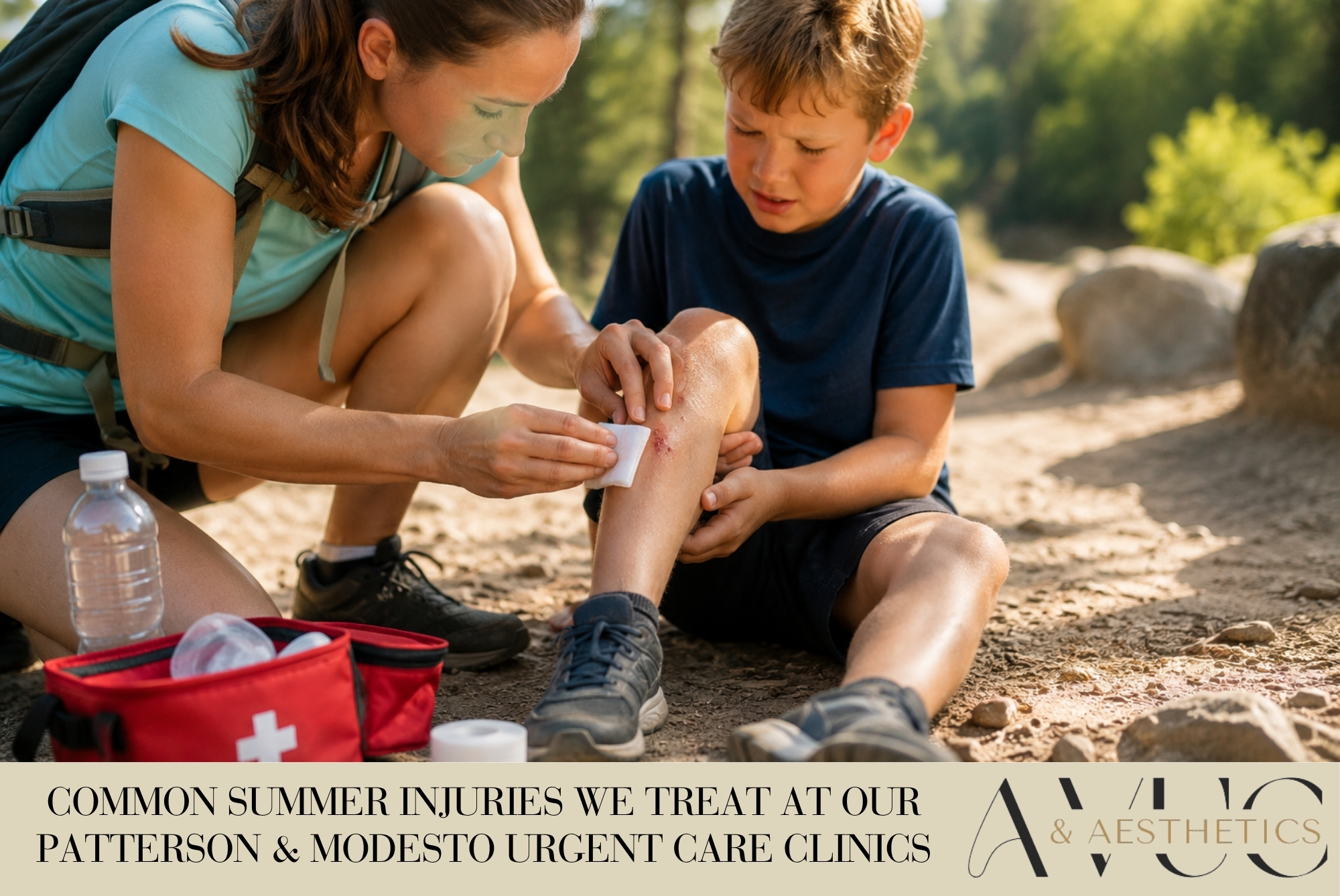
 Summer in California’s Central Valley means more time outdoors, more recreational activities, family trips, sports, yardwork, and long days in the sun. Unfortunately, increased activity and hot weather can also bring an increased risk of injuries and heat-related health concerns.
At Apricot Valley Urgent Care & Aesthetics, our Patterson and Modesto urgent care clinics provide convenient evaluation and treatment for many non-life-threatening injuries and illnesses. Whether you experience a minor injury during a weekend activity, develop a painful sunburn, or need medical attention after an unexpected accident, knowing when to visit urgent care can help you receive appropriate treatment without an unnecessary trip to the emergency room.
Below are some of the common summer injuries and conditions that may bring patients to urgent care.
Sprains and Strains
Sprains and strains are common during the summer because people often become more physically active. Hiking, running, sports, swimming, home improvement projects, and even a misstep while walking can result in an injury.
A sprain occurs when ligaments—the tissues connecting bones to one another—are stretched or torn. A strain affects a muscle or tendon.
Common symptoms can include pain, swelling, bruising, tenderness, stiffness, and difficulty moving or putting weight on the affected area.
Minor injuries may improve with rest and appropriate home care, but significant pain, swelling, limited movement, or difficulty using the injured area should be medically evaluated. An urgent care provider can examine the injury and determine whether additional testing or treatment is appropriate.
Cuts, Scrapes, and Minor Wounds
Summer activities can lead to cuts and abrasions from falls, gardening tools, sports equipment, outdoor projects, broken objects, or other accidents.
Although some superficial wounds can be cleaned and cared for at home, deeper cuts or wounds that will not stop bleeding may require medical attention. Prompt evaluation is also important if a wound contains dirt or debris that cannot be removed easily.
Medical evaluation can help determine whether a wound needs additional cleaning, closure, or other treatment. Your provider can also review whether tetanus vaccination should be considered based on the type of wound and your vaccination history.
Seek emergency care for severe bleeding that cannot be controlled with direct pressure, very deep or extensive wounds, or injuries involving major trauma.
Minor Burns
Summer presents several opportunities for accidental burns. Hot grills, fire pits, cooking equipment, vehicle surfaces, and other heat sources can cause thermal burns.
Minor burns may cause redness, pain, tenderness, or small blisters. More serious burns can involve extensive blistering, deeper tissue damage, significant pain, or large areas of the body.
Urgent care may be appropriate for certain minor burns. Burns that are extensive, deep, caused by electricity or chemicals, or involve sensitive areas such as the face, hands, feet, major joints, or genitals may require emergency or specialized medical care.
Sunburn
A sunburn is more than an uncomfortable inconvenience. It is an inflammatory reaction caused by excessive exposure to ultraviolet radiation.
Symptoms can range from red, warm, tender skin to swelling, blistering, headache, nausea, or other systemic symptoms in more significant cases.
Mild sunburns can often be managed at home by getting out of the sun, cooling the skin, drinking fluids, and protecting the affected area from additional UV exposure. Severe blistering, significant pain, dehydration, fever, confusion, or other concerning symptoms warrant medical evaluation.
Prevention is especially important. Protective clothing, shade, and appropriate broad-spectrum sunscreen can help reduce UV exposure.
Heat Exhaustion and Heat-Related Illness
Patterson, Modesto, and surrounding Central Valley communities can experience very hot summer conditions. High temperatures can place significant stress on the body, particularly during exercise, outdoor work, or prolonged exposure to the heat.
Heat exhaustion may cause heavy sweating, weakness, dizziness, headache, nausea, muscle cramps, thirst, or feeling faint.
Someone experiencing possible heat exhaustion should stop strenuous activity, move to a cooler environment, and begin cooling down and replacing fluids when they can safely drink.
Heat stroke is different and is a medical emergency. Confusion, altered behavior, loss of consciousness, seizures, or a dangerously elevated body temperature can indicate heat stroke. Call 911 or seek emergency medical care immediately if heat stroke is suspected.
Dehydration
Hot temperatures and increased physical activity can cause the body to lose substantial amounts of water through perspiration. If those fluids are not adequately replaced, dehydration can occur.
Common signs may include increased thirst, dry mouth, fatigue, headache, dizziness, and decreased or darker-colored urination.
Children, older adults, people exercising outdoors, and individuals spending extended periods in hot environments may be especially vulnerable to dehydration.
Mild dehydration can often improve with fluids and rest in a cool environment. Persistent vomiting, confusion, fainting, inability to keep fluids down, or severe weakness requires prompt medical attention.
Sports and Recreation Injuries
Summer sports and recreational activities can lead to injuries affecting the muscles, joints, bones, and soft tissues. Basketball, soccer, running, cycling, hiking, swimming, and other activities may result in falls, collisions, overuse injuries, or sudden pain.
Common complaints include ankle injuries, knee pain, shoulder pain, muscle strains, bruising, and joint injuries.
If pain is significant, movement is limited, swelling is substantial, or symptoms do not improve as expected, medical evaluation can help determine the extent of the injury and the appropriate next steps.
Insect Bites and Stings
Mosquitoes, bees, wasps, and other insects are more active during warmer months, and outdoor activities increase opportunities for bites and stings.
Many minor reactions cause temporary redness, itching, tenderness, or swelling. However, increasing redness, warmth, drainage, worsening pain, or other symptoms may require evaluation.
A severe allergic reaction is an emergency. Call 911 immediately for symptoms such as difficulty breathing, swelling of the tongue or throat, widespread hives accompanied by breathing problems, severe dizziness, or loss of consciousness.
Minor Animal Bites and Scratches
Outdoor activities can also increase encounters with pets, stray animals, and wildlife. Animal bites and scratches can break the skin and introduce bacteria.
Even a wound that initially appears small may need medical evaluation because infection risk and preventive treatment depend on the animal involved, the location and severity of the wound, and the patient’s vaccination history.
Wash bites and scratches promptly with soap and running water. Seek medical guidance for wounds that break the skin, particularly deep punctures or injuries involving the hands, face, or other sensitive areas. Potential exposure to rabies should be evaluated promptly by an appropriate medical professional or public health authority.
Falls and Minor Traumatic Injuries
Pool areas, outdoor trails, sports fields, playgrounds, and home improvement projects can all create opportunities for falls.
A fall can cause bruises, sprains, cuts, or other injuries. Urgent care can be an appropriate starting point for many non-life-threatening injuries when a patient is stable.
A serious head injury, loss of consciousness, significant neck or back injury, severe bleeding, major deformity, new weakness or numbness, or other severe symptoms should be treated as an emergency.
Eye Irritation and Minor Eye Injuries
Dust, sand, sunscreen, pool chemicals, and outdoor debris can irritate the eyes during summer activities.
Persistent redness, discomfort, tearing, or the sensation that something is in the eye may warrant medical evaluation. Avoid rubbing an injured eye, as this can potentially worsen irritation or damage.
Sudden vision loss, significant changes in vision, penetrating eye injuries, or chemical exposure to the eye require immediate medical attention. For chemical exposure, begin flushing the eye with clean water and seek emergency guidance.
When Should You Choose Urgent Care for a Summer Injury?
Urgent care is designed to evaluate many illnesses and injuries that need timely medical attention but are not immediately life-threatening.
For patients in Patterson and Modesto, urgent care may be appropriate for concerns such as sprains and strains, minor cuts and wounds, minor burns, certain insect bites or stings, dehydration symptoms, and other non-emergency summer health concerns.
The appropriate level of care depends on the severity of the injury and the patient’s symptoms. When an injury appears severe or symptoms suggest a potentially life-threatening condition, emergency care is the safer choice.
When Should You Go to the Emergency Room Instead?
Some injuries and illnesses require emergency medical attention rather than urgent care.
Call 911 or seek emergency care for severe difficulty breathing, chest pain, loss of consciousness, uncontrolled bleeding, severe head or spinal injuries, major trauma, seizures, signs of stroke, severe allergic reactions, suspected heat stroke, or other potentially life-threatening symptoms.
If you are uncertain about the severity of an emergency, do not delay emergency care while waiting for an urgent care appointment.
Summer Injury Prevention Tips for Patterson and Modesto Families
Many summer injuries cannot be completely prevented, but a few precautions can help reduce risk.
Stay Hydrated in Central Valley Heat
Drink fluids regularly, especially when exercising, working, or spending long periods outside. Do not wait until you feel extremely thirsty before responding to your body’s need for fluids.
During especially hot conditions, reduce strenuous outdoor activity when possible and take regular breaks in a cool or shaded environment.
Protect Your Skin From the Sun
Limit excessive UV exposure, seek shade when appropriate, wear protective clothing, and use broad-spectrum sunscreen according to its directions. Reapply sunscreen as recommended, particularly after swimming or sweating.
Wear Appropriate Protective Equipment
Helmets, supportive footwear, eye protection, and activity-specific safety equipment can reduce the likelihood or severity of certain injuries.
Make sure protective equipment fits correctly and is appropriate for the activity.
Warm Up Before Physical Activity
A sudden increase in physical activity can contribute to muscle and joint injuries. A gradual warm-up can prepare the body for exercise.
Increase the duration and intensity of a new activity progressively rather than doing too much too quickly.
Practice Pool and Water Safety
Falls and water-related emergencies can happen quickly. Walk rather than run around wet pool areas, supervise children closely around water, and follow appropriate swimming and boating safety practices.
Use Caution With Grills and Fire Pits
Keep children and pets away from hot cooking surfaces and open flames. Use appropriate tools when grilling, and never leave an active grill or fire unattended.
Why Local Access to Urgent Care Matters During Summer
An unexpected injury can interrupt work, travel, family plans, and recreational activities. Having access to local medical care means residents can seek evaluation when a non-life-threatening problem requires timely attention.
Apricot Valley Urgent Care & Aesthetics serves patients through locations in Patterson and Modesto, California. If you experience a summer injury or illness that is appropriate for urgent care, you can schedule an appointment online or contact the clinic for additional information.
Frequently Asked Questions About Summer Injuries and Urgent Care
What are the most common summer injuries treated at urgent care?
Urgent care clinics commonly evaluate problems such as sprains, strains, cuts, scrapes, minor burns, sports injuries, insect bites and stings, and other non-life-threatening injuries. Heat-related conditions and dehydration symptoms can also occur more frequently during hot weather.
The appropriate treatment depends on the patient’s symptoms, medical history, and severity of the condition.
Can urgent care treat a sprained ankle?
Urgent care is often appropriate for evaluating ankle sprains and similar musculoskeletal injuries. A provider can examine the ankle and determine what treatment or additional evaluation is appropriate.
A visibly deformed joint, severe injury, loss of sensation, or other concerning symptoms may require emergency care.
Should I go to urgent care for a cut?
A cut may warrant urgent care when it is deep, gaping, contaminated, difficult to clean, or continues to bleed despite appropriate direct pressure. A provider can evaluate the wound and determine whether closure or other treatment is necessary.
Uncontrolled or severe bleeding requires emergency care.
Can urgent care help with a minor burn?
Certain minor burns can be evaluated at urgent care. More extensive or deeper burns and burns involving sensitive areas may require emergency or specialized care.
Electrical and significant chemical burns should also receive prompt medical attention.
Should I visit urgent care for a severe sunburn?
Medical evaluation may be appropriate when sunburn causes extensive blistering, significant pain, dehydration, fever, or other concerning symptoms.
Symptoms such as confusion, fainting, or signs of severe heat illness require immediate medical attention.
What are the signs of heat exhaustion?
Heat exhaustion can cause heavy sweating, weakness, dizziness, headache, nausea, thirst, and muscle cramps. The affected person should stop exertion and move to a cooler environment.
Confusion, seizures, loss of consciousness, or other signs of possible heat stroke require emergency medical care.
What is the difference between heat exhaustion and heat stroke?
Heat exhaustion occurs when the body struggles with excessive heat and fluid loss. Heat stroke is a dangerous medical emergency in which the body’s ability to regulate temperature is severely impaired and neurological symptoms such as confusion, seizures, or unconsciousness can occur.
Suspected heat stroke requires immediate emergency medical attention.
Can urgent care treat dehydration?
The appropriate treatment depends on how severe the dehydration is and what is causing it. Mild dehydration can often be addressed with oral fluids, while persistent or significant symptoms may require medical evaluation.
Severe weakness, confusion, fainting, inability to keep fluids down, or other serious symptoms warrant prompt or emergency medical attention.
When should an insect bite or sting be evaluated?
Consider medical evaluation if redness, pain, swelling, warmth, or other symptoms continue to worsen or if there are concerns about infection.
Difficulty breathing, throat or tongue swelling, loss of consciousness, or other symptoms of a severe allergic reaction require immediate emergency treatment.
Should an animal bite be treated at urgent care?
Animal bites that break the skin should be taken seriously because they may become infected and may raise concerns about tetanus or rabies exposure depending on the circumstances.
Wash the area thoroughly and seek medical guidance. Deep wounds, severe bleeding, significant injuries, or potentially serious exposures may require emergency or specialized care.
Can I go to urgent care after falling?
Urgent care may be appropriate after a minor fall that results in a sprain, bruise, minor wound, or similar non-life-threatening injury.
Loss of consciousness, significant head trauma, severe neck or back pain, new neurological symptoms, major deformity, or other serious injuries require emergency evaluation.
Where can I find urgent care in Patterson, California?
Apricot Valley Urgent Care & Aesthetics has a Patterson location at 1108 Ward Ave, Building A, Suite 2, Patterson, CA 95363. Patients can call (209) 843-0434 or visit the practice website for more information.
Where can I find urgent care in Modesto, California?
Apricot Valley Urgent Care & Aesthetics has a Modesto location at 3401 Dale Road, Suite 642-A, Modesto, CA 95356. Patients can call (209) 843-0434 or use the practice website for additional information and appointments.
How do I schedule an appointment with Apricot Valley Urgent Care & Aesthetics?
Appointments can be requested online at avucandaesthetics.com/appointments. Patients can also call Apricot Valley Urgent Care & Aesthetics at (209) 843-0434.
Get Care for Summer Injuries in Patterson and Modesto, CA
Summer should be a time for enjoying family, recreation, travel, and the outdoors—not spending days wondering whether an injury needs medical attention.
When a non-life-threatening summer injury or illness needs timely evaluation, Apricot Valley Urgent Care & Aesthetics provides local access to care in Patterson and Modesto, California.
If your condition is appropriate for urgent care, contact the clinic or schedule an appointment online. For severe or potentially life-threatening symptoms, call 911 or seek emergency medical care immediately.
Contact Information
Apricot Valley Urgent Care & Aesthetics
Patterson Location
1108 Ward Ave, Bldg A, Suite 2
Patterson, CA 95363
Modesto Location
3401 Dale Road, Suite 642-A
Modesto, CA 95356
Phone: (209) 843-0434
Website: avucandaesthetics.com
Appointments: avucandaesthetics.com/appointments